
Reviewed · KHARKHORIN TOURS
From Ulaanbaatar: Semi Gobi, Nomads, Ancient Kharkhorin Tour
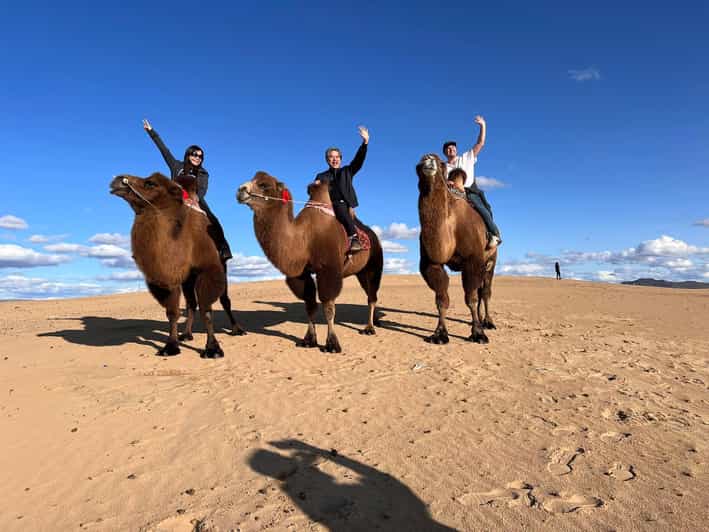
Mongolia gets wonderfully real outside the capital. This two-day trip combines camel riding across the dunes of Elsen Tasarkhai with the history of Kharkhorin, once the capital of the Mongol Empire. I especially like the chance to sleep in a traditional ger with a nomad family and the included visits to Erdene Zuu Monastery and the Kharkhorum Museum. The main drawback is the long drive, with plenty of time in the car on both days.
You leave Ulaanbaatar early, usually between 8:30 and 9:00 a.m., and return around 4:00 or 5:00 p.m. the next day. The $280 price covers transport, an English-speaking guide, meals, entrance tickets, the camel ride, and an overnight ger stay, making it a useful introduction to central Mongolia if you have limited time.
In This Review
- Key points to know before booking
- The road from Ulaanbaatar to Kharkhorin
- Kharkhorin, the Mongol Empire’s former capital
- Erdene Zuu Monastery and Mongolia’s spiritual past
- A night in a traditional ger
- Day two in the Semi Gobi
- What the $280 price covers
- Meals, guides, and the human side of the trip
- Weather, packing, and practical comfort
- Who should book this two-day route?
- Should you book the Semi Gobi and Kharkhorin tour?
- FAQ
- Where does the tour begin?
- How long is the tour?
- Where does the tour visit?
- Is camel riding included?
- What is the overnight accommodation?
- Are meals included?
- Is travel insurance included?
Key points to know before booking
- Ride two-humped Bactrian camels: You learn how to mount and ride through the sandy Elsen Tasarkhai area, with dunes, rocky hills, and open grassland nearby.
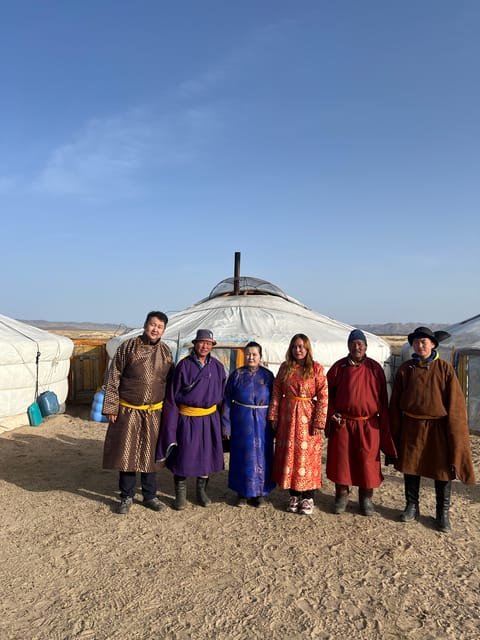
- Sleep in a shared ger: The traditional yurt has four or five beds, and a stove helps keep it warm at night.
- See Mongolia’s old imperial capital: Kharkhorin offers the Kharkhorum Museum and the remains of the city founded in the thirteenth century.
- Visit Erdene Zuu Monastery: This important Buddhist site gives you a strong look at Mongolia’s religious and cultural past.
- Eat with a nomad family: Dinner and breakfast are part of the stay, with a chance to taste local food and, in some cases, horse milk.
- Plan for long road hours: The scenery is rewarding, but a neck pillow, warm clothes, water, and comfortable shoes will make the journey easier.
The road from Ulaanbaatar to Kharkhorin
The tour begins with hotel pickup in Ulaanbaatar between 8:30 and 9:00 a.m. From there, you travel by car toward Kharkhorin, about 360 kilometers southwest of the capital. That distance matters. This is not a quick excursion with a short transfer between attractions. Much of the first day is spent on the road.
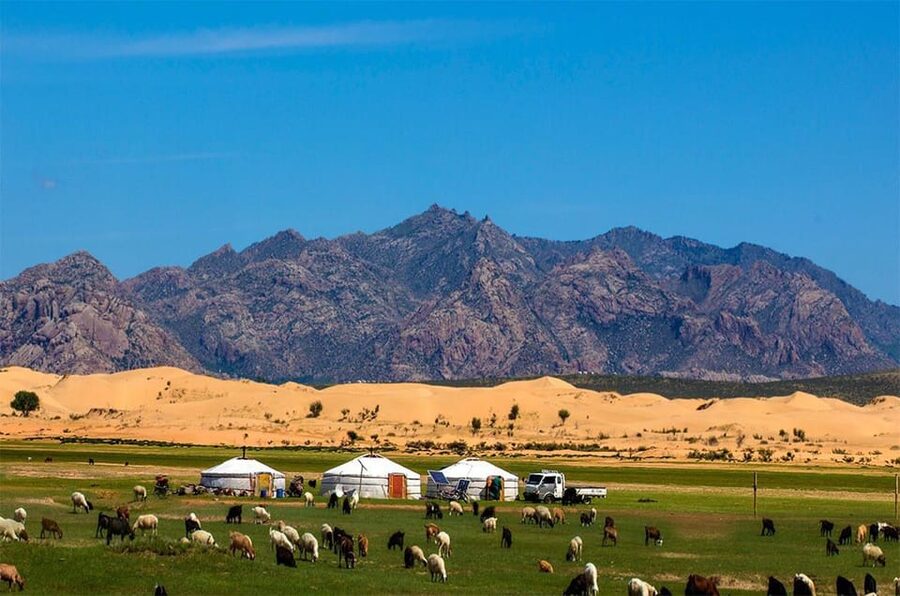
I like this kind of drive in Mongolia because the view is part of the experience. The city falls away, and the open country becomes the main event. You may see broad grassland, rocky hills, distant mountains, and changing shades of dry earth as you head toward central Mongolia.
The trade-off is comfort. A long drive can feel tiring, especially if you are trying to see both history and the Semi Gobi in only two days. Bring a neck pillow if you hope to sleep in the car, and keep water close. The tour operates in all weather, so warm clothing is sensible even when Ulaanbaatar feels mild.
The exact route and timing can shift with road and weather conditions. Accommodation may also be changed to a better option if needed, without an extra charge. That flexibility is useful in a country where conditions can change quickly.
More Gobi Desert trips:
- Ulaanbaatar: Semi-Gobi Desert Day Trip & Camel Ride
★ 4.0 · 92 reviews - 1 Day Semi-Gobi All-included tour
★ 4.0 · 69 reviews - From UB: 2-Days Tour to Kharhorin and sand Semi Gobi
★ 4.5 · 17 reviews
Kharkhorin, the Mongol Empire’s former capital
Kharkhorin, also written as Kharkhorum, was the capital of the Great Mongolian Empire in the thirteenth century. It stood on the right bank of the Orkhon River and became one of the key political centers of the Mongol world.
Today, you should not expect a fully preserved medieval city. The appeal is in understanding what once occupied this open area and how the city fits into Mongolia’s larger story. The tour helps put the surrounding countryside into historical context instead of treating the ruins as an isolated stop.
The Kharkhorum Museum is included in the price. Its displays help explain the old capital, the Mongol period, and the archaeology connected with the area. This is particularly useful if your knowledge of Mongolian history begins and ends with Genghis Khan. The museum gives you a broader view of the empire and the cultures that met here.
Your English-speaking guide is important at this point. Guides associated with this experience include Angarag, Ang, Baaska, and Davka. The quality of the explanation can shape the visit, and the feedback on the guides has been especially warm, with praise for their care, humor, local information, and help with photographs.
Erdene Zuu Monastery and Mongolia’s spiritual past
Erdene Zuu Monastery is one of the most meaningful stops on the first day. Built near the site of ancient Kharkhorin, it links Mongolia’s imperial past with its Buddhist tradition.
The monastery is included in the tour, and so is the entrance ticket. You can expect your guide to explain the religious details and the role of the site in Mongolian culture. One of the best moments may come outside the main buildings, where the monastery sits against wide grassland and open skies.
The setting gives Erdene Zuu much of its power. It is not simply a building to enter, photograph, and leave. The broad space around it makes the monastery feel connected to the country rather than separated from it. Sunset near the temple and camp has been a particular highlight for people taking this trip.
Allow yourself time to look closely. Religious buildings, walls, and surrounding views all matter here. If you are interested in culture, this stop may be more rewarding than the camel ride because it gives you a direct connection to Mongolia’s spiritual past.
A night in a traditional ger
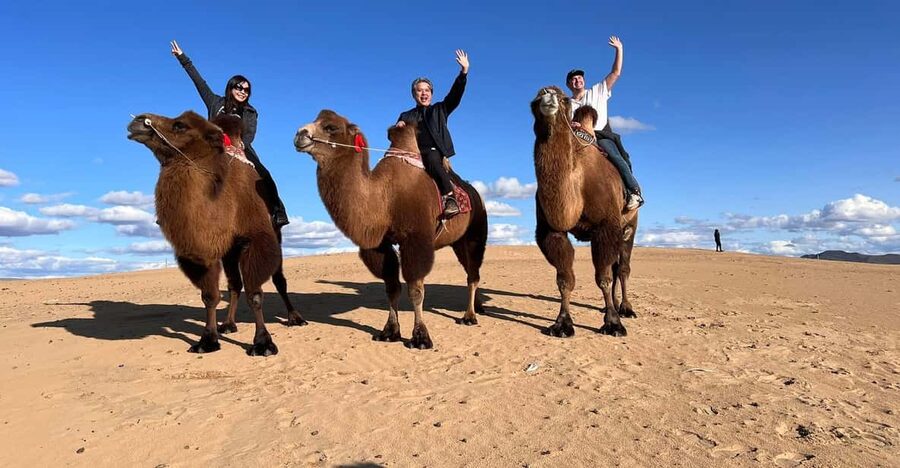
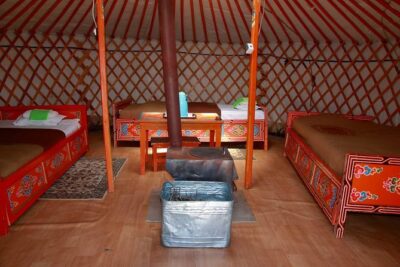
After dinner, you sleep in a ger, the round felt-and-wood home used across Mongolia. The accommodation is shared, with four or five beds in one ger. This is not a private hotel room, so you should be comfortable with simple arrangements and less personal space.
The ger experience is one of the strongest reasons to choose this tour. It brings you closer to everyday nomadic life than a standard hotel can. A stove inside helps warm the room, and the shared setup gives the overnight stay a friendly, communal feel.
Conditions can be cold, especially outside the summer season. One person described waking in a ger during freezing weather, while still finding the stay cozy because of the stove. That is a useful reminder to pack warm clothing rather than relying only on the bedding.
Dinner is served with nomads, and breakfast is included the next morning. You may have the chance to taste local food and horse milk, depending on what your hosts provide. The details of the meal can vary, but the point is the setting: you are eating at a family camp rather than in a city restaurant.
The night sky is another reason to appreciate this stop. Open country and limited artificial light can make the stars a major part of the evening. Campfires and sunset views near the ger have added to the sense of place for past visitors.
More Kharkhorin and Karakorum trips:
- 8 Days Tour: Gobi Desert And Kharkhorin
★ 5.0 · 10 reviews - 7-Days Central Mongolia Tour and Ancient city in Kharkhorin
★ 4.5 · 5 reviews - Mini Gobi and the ancient capital Kharkhorin – 4 days
★ 5.0 · 3 reviews
Day two in the Semi Gobi
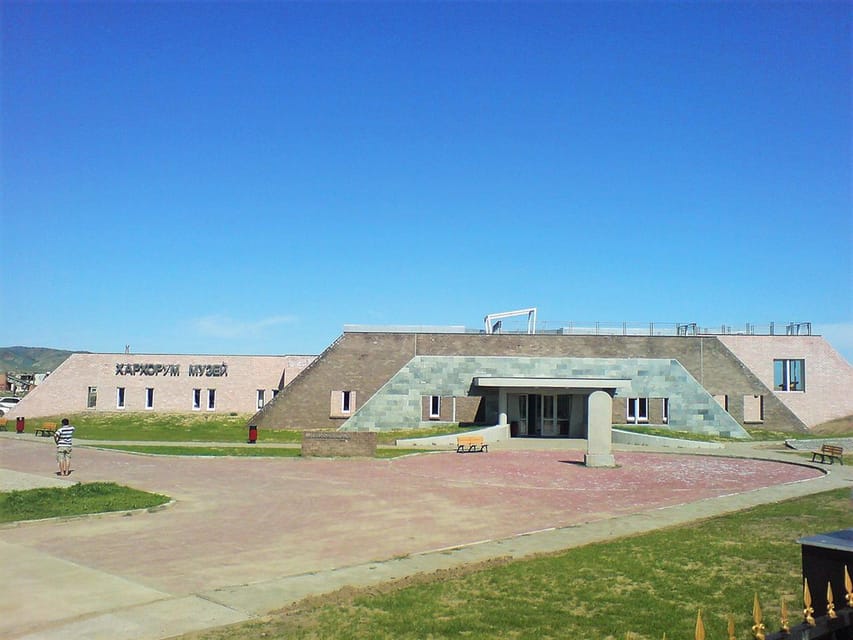
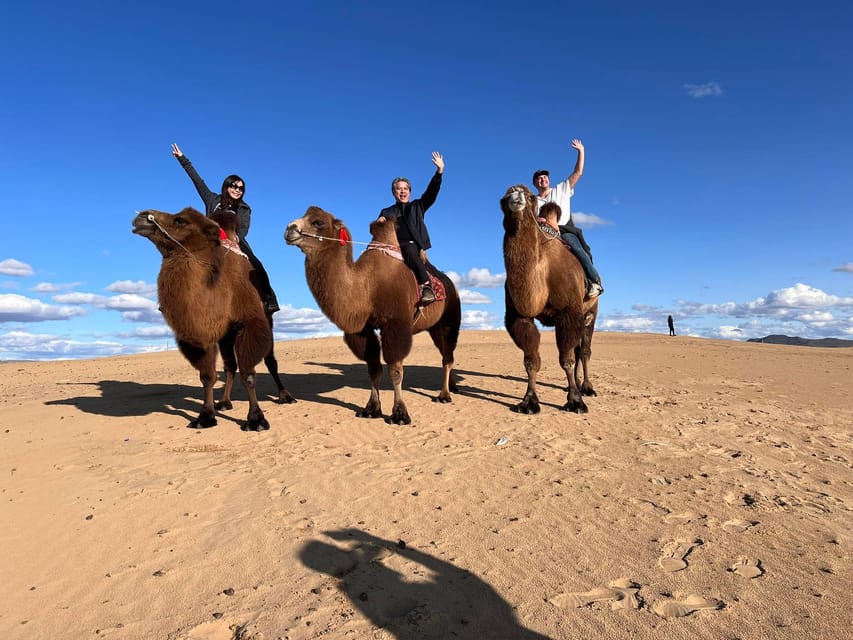
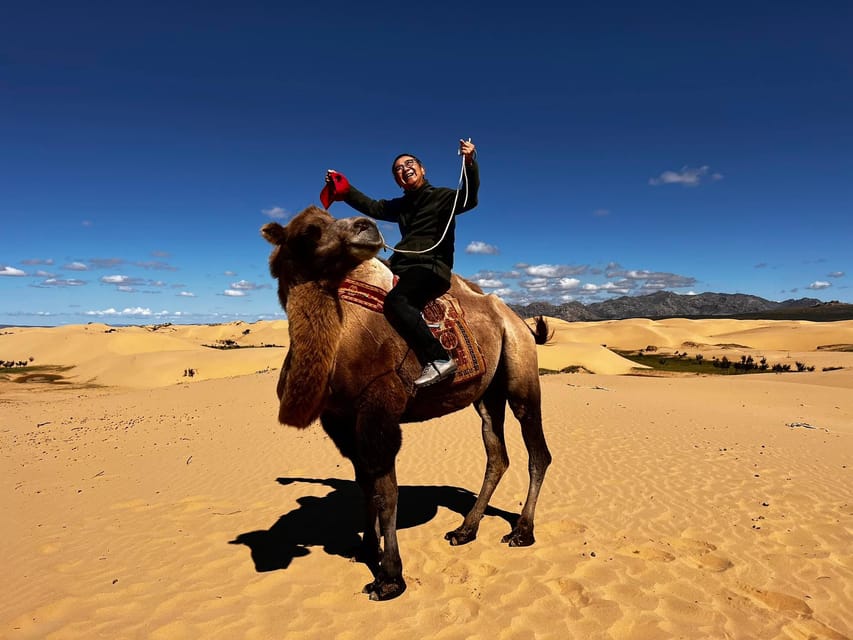
The second day turns from history to open-country adventure. At Elsen Tasarkhai, you ride a two-humped Bactrian camel through an arid area where sand dunes meet rocky hills and grassland.
This is often called the Semi Gobi, not a vast desert of endless sand. That mix is what makes the setting interesting. You get dry dunes, rugged mountains, and open Mongolian prairie in the same outing. The contrast gives you a better sense of how varied central Mongolia can be.
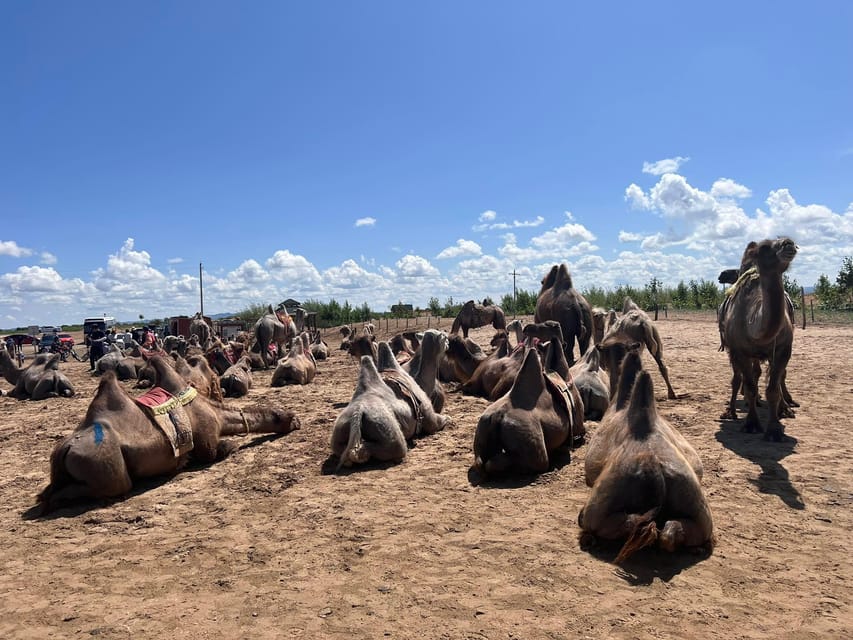
Before setting off, you learn how to ride the camel. Bactrian camels are sturdy, broad-backed animals with two humps, and mounting can feel awkward if you have never done it before. Listen carefully to the local handler, especially when the camel kneels or rises. Move slowly and follow instructions rather than trying to rush the process.
The ride itself is not presented as a long expedition. It is an activity within the day, giving you time to enjoy the dunes and scenery before returning to the vehicle. The animals have been described as well fed, trained, and cared for, which should help you feel more at ease.
One unusual detail is that some outings have also included horse riding. It is not listed as a guaranteed part of the tour, so you should not book expecting both animals. Still, it may be available depending on the local arrangements.
The best light may come early or late in the day. Sunrise camel riding has been especially memorable, while the dunes and rocky hills also photograph well in bright weather. Bring your camera, but do not spend the whole ride looking at a screen. The stillness is part of the appeal.
What the $280 price covers
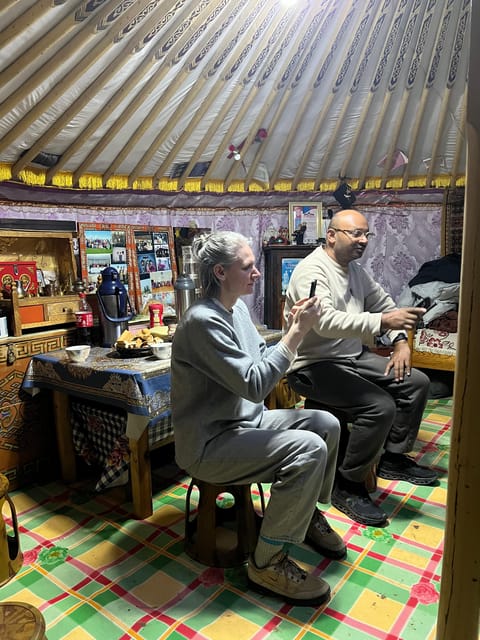
At $280 per person, this tour is not just a camel ride with transport added on. The price includes:
- Hotel pickup and drop-off in Ulaanbaatar
- Transport by car
- An English-speaking guide
- Camel riding at Elsen Tasarkhai
- One night in a shared ger
- Dinner with nomads
- One breakfast, two lunches, and one dinner
- Admission to the Kharkhorum Museum
- Admission to Erdene Zuu Monastery
That bundle gives the tour solid value for a short Mongolia trip. You are paying for a two-day route that joins several experiences which would otherwise require separate transport, planning, and overnight arrangements.
The value is strongest if you want variety. In forty-eight hours, you see a historic capital, a major monastery, a museum, nomadic life, dunes, rocky hills, camels, and a traditional home. It is a busy schedule, but it avoids the cost and planning burden of arranging each part yourself.
The price does not include travel insurance or airport pickup and drop-off. You should arrange your own insurance, especially since the trip operates in all weather. Airport transfers need separate planning as well.
Meals, guides, and the human side of the trip
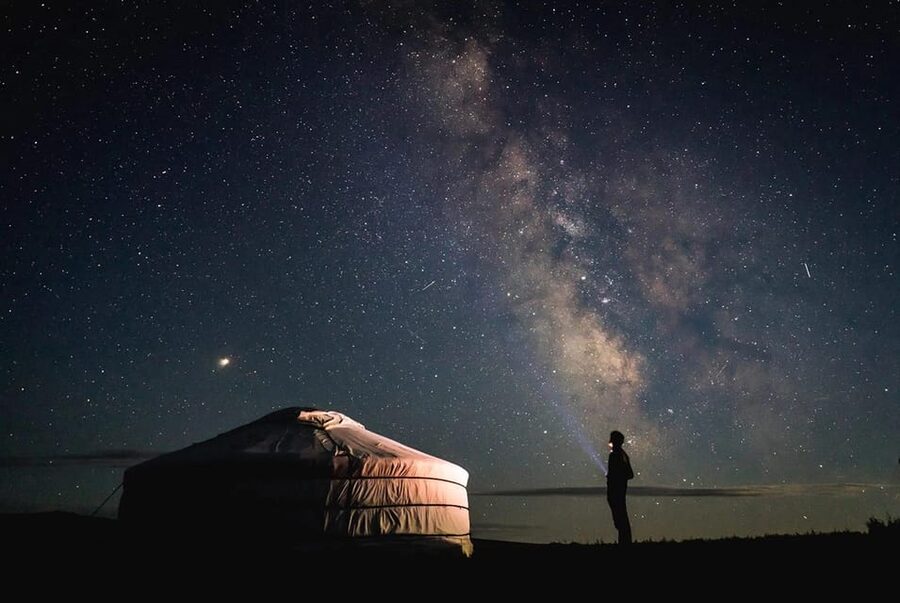
The guide is more than a person who points out monuments. On this route, your guide helps translate history, explain religious customs, manage the camel ride, and make the ger stay comfortable.
The strongest guide feedback has focused on kindness, humor, photography help, and practical care. Davka has been described as witty and attentive in cold conditions. Angarag and Ang have also been praised for local knowledge and making visitors feel comfortable, while Baaska has been noted for being helpful and pleasant.
Because the tour is conducted in English, you can ask questions as you go. That matters at Erdene Zuu and the museum, where a little explanation adds much more meaning. It also helps during the nomad visit, where customs and food may be unfamiliar.
Meals are included, but this is not a food tour. You should expect local hospitality rather than a menu with lots of choices. Vegetarians need to advise the operator when booking so suitable food can be arranged.
Weather, packing, and practical comfort
Mongolia’s weather can shift quickly, and the tour runs in all conditions. Pack layers, even if the forecast looks comfortable in Ulaanbaatar. Warm clothing is particularly important for the ger night, early morning, and exposed dune areas.
Bring:
- Comfortable shoes for sand, uneven ground, and monastery visits
- Warm clothing
- Water
- A camera
- A neck pillow for the long drive
The car journey is the main physical and practical challenge. You are not signing up for a strenuous trek, but you will spend many hours seated and may encounter rougher roads. Comfortable clothing and regular attention to hydration will help.
The shared ger is another consideration. Four or five beds in one room suits people who want a social, simple overnight stay. If you need privacy or hotel-style facilities, this may feel basic. The operator says accommodation can be changed to a better option when weather or other factors require it, with no extra payment, but you should still approach the trip as a rural stay.
Who should book this two-day route?
I would choose this tour if you have only a short time in Mongolia and want more than city sightseeing. It gives you a practical first taste of the country’s history, religion, nomadic culture, open country, and animals.
It suits people who enjoy:
- Cultural sites with a guide
- Simple rural accommodation
- Short animal rides
- Long scenic drives
- Local meals and family hospitality
- Photography, sunsets, and star-filled skies
It is less suitable if you dislike shared rooms, long car journeys, cold nights, or a schedule that covers a lot of ground quickly. The Semi Gobi is not a full desert expedition, and Kharkhorin is a historic site rather than a fully reconstructed ancient city.
The tour has a 4.6 rating from 84 reviews, with especially strong praise for the guides, the ger night, the nomad welcome, and the combination of camel riding with cultural stops. You can reserve now and pay later, and cancellation is available up to 24 hours before departure for a full refund.
Should you book the Semi Gobi and Kharkhorin tour?
Book it if you want a compact, well-rounded introduction to central Mongolia and are willing to trade comfort for access. The ger stay, nomad dinner, Erdene Zuu, and Bactrian camel ride give you a much fuller picture than a simple day trip from Ulaanbaatar.
I would be most enthusiastic about it for first-time visitors with limited time. Just accept the long road hours, pack for cold weather, and remember that the shared ger is part of the experience, not a hotel substitute. For many people, watching the stars beside a nomad camp and riding a camel below rocky hills will be worth every minute in the car.
FAQ
Where does the tour begin?
The tour includes pickup from your hotel in Ulaanbaatar, usually between 8:30 and 9:00 a.m.
How long is the tour?
It lasts two days, with a return to your Ulaanbaatar hotel at about 4:00 or 5:00 p.m. on the second day.
Where does the tour visit?
The route includes Kharkhorin, the Kharkhorum Museum, Erdene Zuu Monastery, the nomad camp, and the Semi Gobi area at Elsen Tasarkhai.
Is camel riding included?
Yes. A camel ride at Elsen Tasarkhai is included, along with instruction on how to ride a two-humped camel.
What is the overnight accommodation?
You sleep in a traditional ger, or yurt, with a shared room containing four or five beds.
Are meals included?
Yes. The package includes one breakfast, two lunches, and one dinner. Dinner is served with nomads.
Is travel insurance included?
No. Travel insurance is not included, so you should purchase your own policy before the tour.
More ger camp and nomad family stays
- Cooking Class in a Traditional Ger Home in Ulaanbaatar Suburbs
★ 5.0 · 84 reviews - MONGOLIAN NOMADS: 2-Day Horse Trekking & Cow Milking Tour
★ 4.8 · 23 reviews - Mongolia Nomad Trek • On-Foot & Horseback ~ 15 Day
★ 5.0 · 5 reviews - 5 day Central Mongolia and Nomad stay tour
★ 3.5 · 4 reviews
Newly listed around Ulaanbaatar
- Ulaanbaatar Signature Tour – Mongolia’s Capital in One Day★ 4.3 · 3 reviews
- VIP Pick Up Or Drop Off Airport Transfer In Ulaanbaatar City (UB)★ 5.0 · 2 reviews
- Ulaanbaatar: 4-Day Central Mongolia Winter Tour★ 5.0 · 3 reviews
- Ulaanbaatar: Chinggis Khaan Museum Highlights Private Tour★ 5.0 · 2 reviews
- Private – Ulaanbaatar City Tour★ 3.5 · 3 reviews
- Private Transfer between New Ulaanbaatar International Airport and Ulaanbaatar★ 5.0 · 4 reviews
- Transfer service to Terelj national park★ 5.0 · 3 reviews
- A Day Authentic Mongolian Trip near Ulaanbaatar all-inclusive★ 5.0 · 3 reviews
Kharkhorin Tours, compared.
7-Days Central Mongolia Tour and Ancient city in Kharkhorin
Read our review →
Mini Gobi and the ancient capital Kharkhorin – 4 days
Read our review →Browse the lists this tour appears in