Reviewed · ULAANBAATAR TOURS
Ulaanbaatar: Chinggis Khaan Museum Highlights Private Tour
Mongolia’s story begins indoors. At the Chinggis Khaan National Museum, you move from Bronze Age objects to the Mongol Empire through nine floors of artifacts, royal clothing, armor, ancient art, and digital displays. I like the private format because your guide can shape the visit around your interests, and I like that the entrance ticket is already included in the $68 price.
The museum also brings history into the present with augmented reality and virtual reality features. The main consideration is the guide’s English. One verified booking praised the tour’s punctuality, cleanliness, friendliness, and reliability, but noted that stronger English would have helped. I would treat language clarity as something worth confirming when you book.
For a four-hour visit, this is a serious museum outing rather than a quick photo stop. You meet at the museum, arrange your own transport, and then explore Mongolia’s royal, archaeological, and cultural past with a private guide for up to nine people.
In This Review
- Key points to know before you book
- Why this museum matters in Ulaanbaatar
- Starting with Bronze Age Mongolia
- Hunnu and Nomadic Empire displays
- Royal robes, armor, and ancient art
- The Hall of Fame and royal lineage
- Tombs, shrines, and archaeological monuments
- VR and AR: history with buttons and screens
- Four hours with a private guide
- Price, transport, and practical value
- Seasonal hours you should plan around
- Who should book this experience?
- Should you book the Chinggis Khaan Museum private tour?
- FAQ
- Where does the Chinggis Khaan Museum private tour meet?
- How long does the tour last?
- How many people can join the private tour?
- Is the museum entrance ticket included?
- What languages are available?
- Is the museum wheelchair accessible?
- When is the museum open for this activity?
- Can I cancel the tour?
- Are VR and AR experiences included?
Key points to know before you book
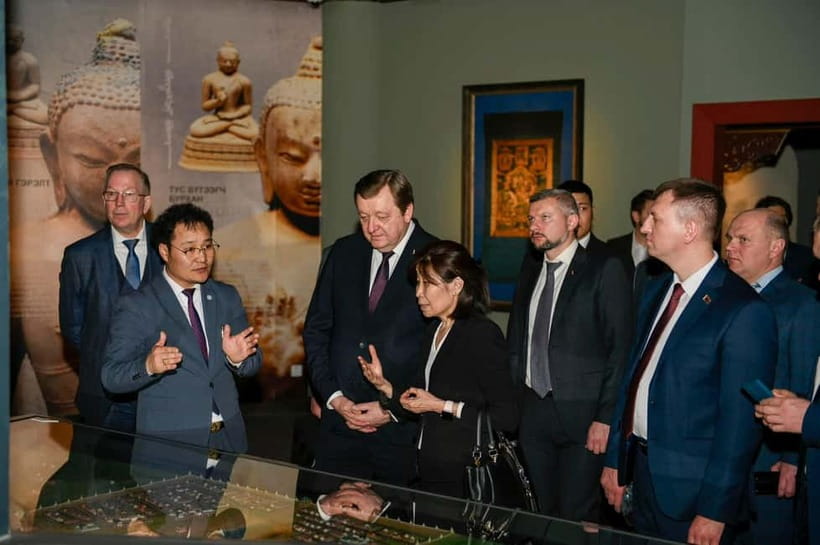
- Nine floors of Mongolian history: The museum covers the Bronze Age, early states, the Hunnu and Nomadic Empires, the Mongol Empire, and later royal periods.
- More than 90 percent original artifacts: Noble robes, armor, ancient art, inscriptions, tomb materials, and archaeological treasures give the displays real substance.
- Private guiding for one to nine people: You get your own guide rather than joining a large public group.
- VR and AR add a modern layer: Digital scenes and interactive features help explain people, places, and events that can be hard to picture from objects alone.
- $68 includes admission: The stated price is for a private group of up to one person, with private group options available for as many as nine people. Check the booking page carefully for the exact group pricing that applies to you.
- Timing changes by season: From May 15 to September 14, visits can be booked from 9 a.m. to 4 p.m. From September 15 to May 14, the museum is closed Tuesdays and bookings run from 9 a.m. to 1 p.m.
Why this museum matters in Ulaanbaatar
The Chinggis Khaan National Museum is designed to tell Mongolia’s story as a long sequence, not as a single chapter about Chinggis Khaan. That matters because the Mongol Empire did not appear from nowhere. The displays begin with earlier societies and continue through the political and cultural periods that shaped modern Mongolia.
You can expect a mix of objects and interpretation. Bronze Age material introduces the country’s early cultures. Later galleries cover the Hunnu and Nomadic Empires, followed by royal traditions and the age of the Mongol Empire. The museum also presents ancient inscriptions, archaeological monuments, tombs, shrines, and objects connected with noble monarchs.
I appreciate this broad frame. If your only goal is to see a portrait or statue of Chinggis Khaan, you can probably finish the visit much faster. But if you want to understand why his name carries such weight in Mongolia, the earlier galleries give useful context.
The museum’s emphasis on original material also helps. More than 90 percent of the objects are described as authentic Mongolian artifacts. That does not mean every display will be equally gripping, but it does mean you are looking at actual pieces of Mongolian material culture rather than a room built mainly around copies.
A few more Ulaanbaatar departures worth comparing
- From Ulaanbaatar: Genghis Khan Statue NationalPark CamelRide
★ 4.8 · 353 reviews - Genghis Khan Statue Day Tour+National Park+Camel Ride+Eagle
★ 4.5 · 261 reviews - From Ulaanbaatar: Central Mongolia Guided 3-Day Tour
★ 4.6 · 186 reviews
Starting with Bronze Age Mongolia
The early galleries set the tone for the visit. Bronze Age artifacts show that Mongolia’s story reaches far beyond the medieval period. These objects help you think about the people, skills, and traditions that existed before the rise of the great steppe empires.
A guide is especially useful here because early archaeological objects can seem quiet at first glance. A small artifact may have more historical value than a larger decorative piece, but you need context to understand why. In a private tour, you can stop and ask for clarification instead of waiting for a fixed group to move on.
The museum’s sequence also helps you notice change over time. Clothing, weapons, art, and ceremonial objects reveal different ways of life. You are not simply looking at isolated cases. You are following a long development from early communities to organized states and royal power.
If you are mainly interested in Chinggis Khaan himself, do not rush through this section. The first floors help explain the traditions of leadership, warfare, mobility, and craftsmanship that later shaped the Mongol world.
Hunnu and Nomadic Empire displays
The galleries devoted to the Hunnu and Nomadic Empires add another important layer. Mongolia is often presented abroad through the familiar image of the Mongol Empire, but earlier steppe powers also created systems of rule, trade, warfare, and culture.
The archaeological objects from these periods give the museum much of its authority. You may find that the material is more rewarding when your guide explains how the objects connect to wider changes in Mongolian society. The private format gives you room to ask focused questions about rulers, daily life, military equipment, or religious practice.
This is also where the museum’s emphasis on archaeology becomes clear. Tombs, shrines, and ancient monuments are not just dramatic subjects. They show how people remembered the dead, honored rulers, and expressed power through ceremony.
I would allow time for this part of the museum even if you have limited background knowledge. You do not need to arrive as a specialist. A good question to ask is how the earlier empires influenced the later Mongol state. That kind of connection can make the visit feel much more coherent.
Royal robes, armor, and ancient art
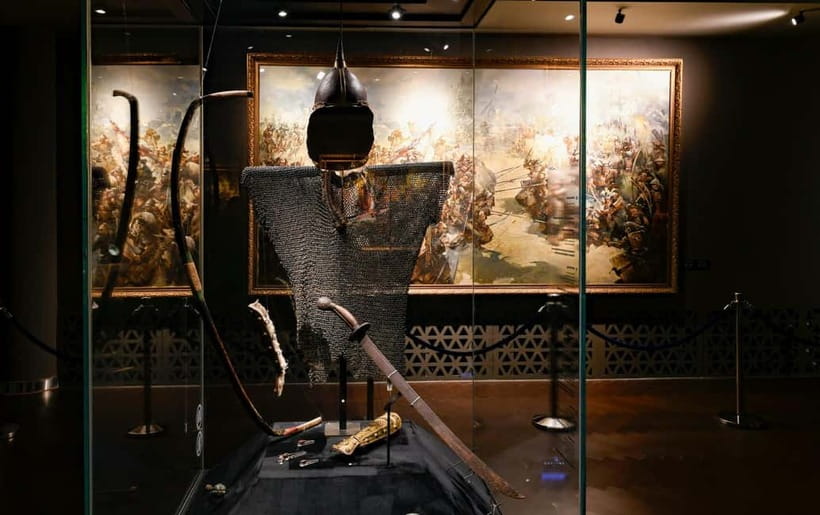
The royal objects are likely to be the most immediately appealing part of the visit. Noble robes, armor, and ancient art put a human face on the political story. Instead of thinking only about armies and borders, you see how status was expressed through clothing, materials, decoration, and ceremony.
Armor can make the military side of Mongolian history easier to picture, while robes reveal another kind of power. Clothing communicated rank and identity. Ancient art adds a less practical but equally important view of the period, showing how people represented animals, rulers, religion, and the natural world around them.
The museum also provides access to rare artifacts linked with Mongolia’s royal empires. I would pay attention to the difference between an object’s beauty and its historical role. A richly decorated item may tell you about court culture, while a plain archaeological fragment may say more about ordinary life.
With a private guide, you can choose the balance that suits you. If you love art, ask for more time with decoration and symbolism. If you prefer military history, ask your guide to focus on armor, weapons, and the organization of the empires. That flexibility is the clearest reason to choose this format over a basic museum admission.
A very different day on the same map:
- Ulaanbaatar: Small Group 3-Day Best of Central Mongolia Tour
★ 4.1 · 171 reviews - Terelj national park transport /Best price tour
★ 4.7 · 135 reviews - Ulaanbaatar: Chinggis Khaan Statue and Turtle Rock Day Tour
★ 4.7 · 132 reviews - BEST 5* Chinggis Khaan Airport UBN to Ulaanbaatar Transfer Taxi
★ 5.0 · 116 reviews
The Hall of Fame and royal lineage
The Hall of Fame focuses attention on Mongolia’s rulers and major figures. This is where the museum’s royal story becomes more direct, with monumental artifacts and displays connected to noble monarchs.
The subject can become confusing because many names and reigns appear close together. A private guide can help you keep track of the royal lineage and explain which figures mattered most. I would not expect every label to answer every question, so use the guide actively.
Ancient inscriptions also add value here. Written records give a different kind of evidence from clothing, weapons, and tomb objects. They can show how rulers presented themselves, what ideas they wanted remembered, and how power was recorded.
The Hall of Fame is a good place to pause and organize what you have seen. By this stage, you have moved from early archaeology toward royal authority and imperial memory. The museum is asking you to see Chinggis Khaan not only as a conqueror, but as part of a much longer Mongolian tradition.
Tombs, shrines, and archaeological monuments
The references to tombs, shrines, and archaeological monuments give the museum a more personal side. These displays connect political history with burial, belief, memory, and respect for the dead.
You should expect some material to be visually restrained. Archaeological evidence is not always grand. A fragment, inscription, or burial object may require explanation before its importance becomes clear. This is another point where a guide can save you time and help you focus on the pieces most relevant to your interests.
The museum’s treatment of shrines and tombs also reminds you that royal history is not only about public achievements. It includes the ways people honored ancestors and created places of remembrance. That perspective can make the museum feel less like a parade of victories and more like a record of culture and belief.
If you are visiting with children, the digital features may hold attention more easily than these displays. Adults who enjoy archaeology, genealogy, or religious history may find this section especially rewarding.
VR and AR: history with buttons and screens
The museum uses augmented reality and virtual reality to present Mongolia’s past in a more accessible way. These features can help you picture settings, events, and people that are difficult to understand from a glass case alone.
I like the idea of using technology here because the subject covers a huge amount of time and space. A digital reconstruction can show scale and movement. It may also help younger visitors connect with objects that otherwise seem distant.
Still, technology should be treated as an aid, not the main reason to visit. The strongest part of the museum is its original material. VR and AR can make the story easier to follow, but they cannot replace the value of standing before a genuine robe, piece of armor, inscription, or archaeological object.
Availability and the exact form of each digital feature are not described in detail, so I would keep expectations flexible. Think of these displays as an added benefit rather than a guaranteed standalone attraction.
Four hours with a private guide
The scheduled duration is four hours, which gives you enough time for a broad look at the museum without treating it as a rushed checklist. A private tour for one to nine people is especially useful if your group has different interests.
You can ask the guide to slow down in the royal galleries, explain the early empires, or spend more time on art and clothing. A public group usually has to follow one pace. Here, your questions can shape the visit.
The private arrangement also suits couples, families, and small groups who want to discuss the displays as they go. It may feel less efficient if you only want a quick introduction to the museum. For that purpose, four hours could be more time than you need.
The guide languages are English and Mongolian. English support is available, but the one verified booking specifically suggested that stronger English would have improved the experience. I would confirm the language arrangement and your preferred level of detail before paying, especially if museum interpretation is central to your trip.
Price, transport, and practical value
The listed price is $68 per group up to one person, and the tour includes the Chinggis Khaan National Museum entrance ticket. Private group options can include up to nine people, so the value improves if the price structure allows several members of your party to share the booking.
The inclusion of admission keeps the cost easy to understand. You are paying for the guide and private format rather than arranging the ticket separately. For a four-hour visit with access to rare objects, the Hall of Fame, library, conference rooms, and digital features, the price can be reasonable for a solo visitor or small private group.
The exact group pricing deserves a careful check because the headline says up to one person while the activity also allows private groups of up to nine. Do not assume that $68 covers all nine people unless your booking details say so.
You meet at the museum, not at your hotel. Hotel pickup and drop-off are not included. The UBCab app is suggested for arranging your own ride, though you can use any transport method that suits you.
The museum is wheelchair accessible. Smoking, vaping, alcohol, and drugs are not allowed indoors. Book at least one day ahead so the guide can be notified and the private visit prepared properly.
Seasonal hours you should plan around
The museum is open daily for this activity in summer, from May 15 through September 14. Booking times run between 9 a.m. and 4 p.m.
In winter, from September 15 through May 14, the museum is closed on Tuesdays. Bookings are available from 9 a.m. to 1 p.m. This shorter winter window makes advance planning more important.
You can cancel up to 24 hours before the activity for a full refund, and the reserve-now, pay-later option gives you some flexibility. Those policies are useful if your Ulaanbaatar schedule is still moving around.
Who should book this experience?
I would choose this tour if you want more than a quick look at Mongolia’s most famous ruler. It suits history fans, museum lovers, and anyone who wants a guide to connect archaeological objects with royal power and Mongolian identity.
It is also a good fit for a small group with mixed interests. One person can ask about armor, another about art, and another about inscriptions or royal lineage. The guide can adjust the pace rather than forcing everyone through the same script.
You might choose a shorter or unguided museum visit if you have only a limited amount of time, dislike long indoor visits, or prefer reading displays alone. The four-hour duration is generous, and the private format is most valuable when you plan to ask questions.
Families may appreciate the VR and AR elements, while visitors with mobility concerns should note the stated wheelchair access. Solo visitors can still book, but they should check the final price since the headline rate is listed for a group up to one person.
Should you book the Chinggis Khaan Museum private tour?
Book it if you want context, original artifacts, and personal guidance. The museum offers a substantial look at Mongolia from the Bronze Age through the great empires and royal periods. The private format, included admission, original objects, and VR and AR features make it more than a basic museum entry.
My main caution is language clarity. The available evidence points to excellent punctuality, cleanliness, friendliness, and reliability, but one booking found that stronger English would have helped. Confirm the guide’s English level if detailed explanations matter to you.
For a four-hour cultural visit in Ulaanbaatar, this is a sensible choice for people who want Mongolia’s story explained rather than simply displayed.
FAQ
Where does the Chinggis Khaan Museum private tour meet?
The meeting point is the Chinggis Khaan National Museum in Ulaanbaatar. Hotel pickup and drop-off are not included, so you arrange your own transport.
How long does the tour last?
The tour lasts four hours. Starting times depend on availability and the museum’s seasonal schedule.
How many people can join the private tour?
The activity is offered as a private group experience for one to nine people. Check the final booking details for the exact price based on your group size.
Is the museum entrance ticket included?
Yes. The Chinggis Khaan National Museum entrance ticket is included in the tour.
What languages are available?
Live guiding is available in English and Mongolian. Book at least one day ahead so the guide can be notified and the private tour prepared.
Is the museum wheelchair accessible?
Yes. The activity information states that the museum is wheelchair accessible.
When is the museum open for this activity?
From May 15 to September 14, bookings are available daily between 9 a.m. and 4 p.m. From September 15 to May 14, the museum is closed Tuesdays and bookings run from 9 a.m. to 1 p.m.
Can I cancel the tour?
Yes. You can cancel up to 24 hours in advance for a full refund.
Are VR and AR experiences included?
Yes. The tour includes access to VR and AR experiences that present Mongolian history through interactive digital features.
Newly listed around Ulaanbaatar
- Ulaanbaatar Signature Tour – Mongolia’s Capital in One Day★ 4.3 · 3 reviews
- VIP Pick Up Or Drop Off Airport Transfer In Ulaanbaatar City (UB)★ 5.0 · 2 reviews
- Ulaanbaatar: 4-Day Central Mongolia Winter Tour★ 5.0 · 3 reviews
- Private – Ulaanbaatar City Tour★ 3.5 · 3 reviews
- Private Transfer between New Ulaanbaatar International Airport and Ulaanbaatar★ 5.0 · 4 reviews
- Transfer service to Terelj national park★ 5.0 · 3 reviews
- A Day Authentic Mongolian Trip near Ulaanbaatar all-inclusive★ 5.0 · 3 reviews
- Terelj National Park and Chinggis Khaan Statue Tour★ 5.0 · 2 reviews
Ulaanbaatar Tours, compared.


Genghis Khan Statue Day Tour+National Park+Camel Ride+Eagle
Read our review →

Small Group 3-Day Best of Central Mongolia Tour
Read our review →
Terelj national park transport /Best price tour
Read our review →