
Reviewed · KHARKHORIN TOURS
8 Days Tour: Gobi Desert And Kharkhorin
Wide skies, empty roads, unforgettable stops. This eight-day Mongolia tour links the Gobi Desert with Kharkhorin, the former capital of the Mongol Empire, while covering major sites such as Tsagaan Suvarga, Khongor Els, the Flaming Cliffs, and Erdenezuu Monastery. I like the small-group format, limited to no more than 10 people, and I like that accommodation, transport, breakfast, lunch, and dinner are built into the price. The main consideration is the long overland travel between remote stops, so this is not a relaxed city break.
The tour costs $1,693 per person, which is a serious amount, but it covers seven nights of dinner and breakfast, eight lunches, yurts or tourist camps, a driver, a guide, and round-trip transport from Ulaanbaatar. You should also expect basic conditions, changing roads, and simple overnight stays. The strongest praise centers on good organization, the guide, and the driver, with the organizer Enkhzaya Ganbold responding personally to a five-star review.
In This Review
- Key points to know before booking
- Why this route works for a first visit to Mongolia
- Day 1: Granite formations at Baga Gazariin Chuluu
- Day 2: The sea cliffs of Tsagaan Suvarga
- Day 3: Yoliin Am and its narrow ice canyon
- Day 4: Climbing the Khongor Els Sand Dunes
- Day 5: Dinosaur country at the Flaming Cliffs
- Day 6: Ongi Monastery beside the river
- Day 7: Kharkhorin and the old imperial capital
- Day 8: Back to Ulaanbaatar and Mongolian cashmere
- Yurts, camps, meals, and the value of $1,693
- Who should book this Gobi route?
- Should you book the 8 Days Tour?
- FAQ
- What is included in the tour price?
- How large is the group?
- What time does the tour start?
- Where do you stay during the tour?
- Can most people take part?
- What happens if bad weather cancels the tour?
Key points to know before booking
- See six major Mongolian sites in eight days: Baga Gazariin Chuluu, Tsagaan Suvarga, Yoliin Am, Khongor Els, Bayanzag, Ongi Monastery, and Kharkhorin.
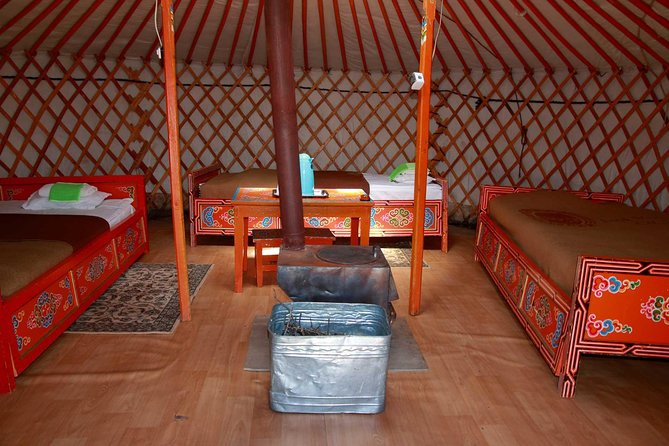
- Sleep in family yurts or tourist camps: This gives you a closer look at traditional Mongolian accommodation, though comfort levels may be simpler than in a hotel.
- Travel with a small group of up to 10 people: The size should make stops easier to manage and allow more direct contact with your guide.
- Most meals are included: Seven breakfasts, seven dinners, and eight lunches are covered. Alcoholic drinks are not.
- Finish with Mongolian cashmere shopping: The final day includes factory stores for Goyo and Gobi in Ulaanbaatar.
- Allow for a full road-trip experience: The attraction is the sequence of remote places, not a single central base.
Why this route works for a first visit to Mongolia
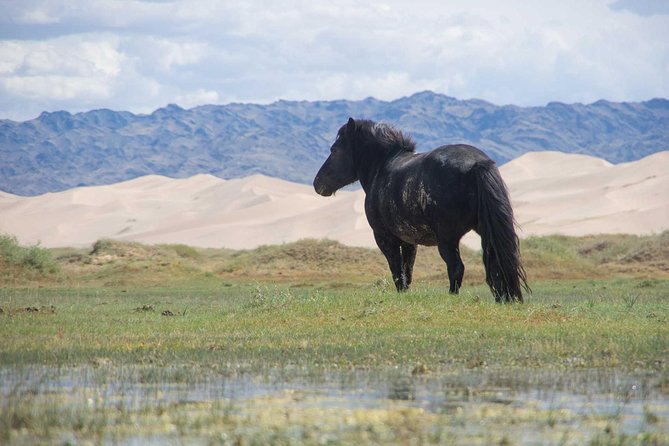
This is a good route if you want a broad introduction to southern and central Mongolia without arranging every transfer yourself. The tour moves from granite mountains to fossil-rich cliffs, high desert, sand dunes, Buddhist ruins, and the old imperial capital. You get a sense of how varied Mongolia can be within one long journey.
The route also mixes famous sights with quieter stops. Tsagaan Suvarga and the Flaming Cliffs are major names, while Baga Gazariin Chuluu and Ongi Monastery add a more local and historical feel. That variety matters because eight days of only sand dunes would become repetitive.
The schedule is active. Hiking, climbing to viewpoints, walking through protected areas, and taking photographs are built into the experience. You should be comfortable spending long periods on the road and changing accommodation most nights. The reward is access to places that are difficult to connect by public transport.
The tour begins at 7:30 a.m. in Ulaanbaatar. Pickup is offered, and the trip returns to the city on Day 8. Since the activity is described as private, only your group participates, while the advertised group limit of 10 gives you an idea of the largest likely party size.
More Gobi Desert trips:
- Ulaanbaatar: Semi-Gobi Desert Day Trip & Camel Ride
★ 4.0 · 92 reviews - From Ulaanbaatar: Semi Gobi, Nomads, Ancient Kharkhorin Tour
★ 4.6 · 84 reviews - 1 Day Semi-Gobi All-included tour
★ 4.0 · 69 reviews
Day 1: Granite formations at Baga Gazariin Chuluu
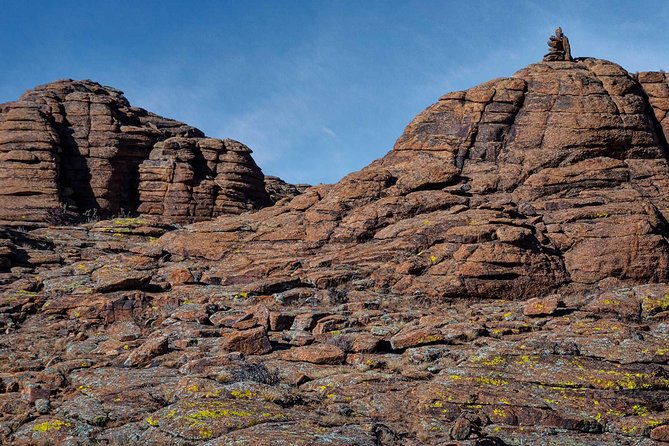
The first stop trades city streets for Baga Gazariin Chuluu, a protected area of striking granite mountains. The highest point reaches 1,751 meters above sea level, giving the opening day a strong sense of scale.
The site is not only about scenery. You can visit the ruins of a Buddhist temple once used by monks, see a stone hole containing spring water said to be used for the eyes, and explore a small cave. These details give the stop more character than a simple photo halt.
I like the way this first day sets up the rest of the trip. You begin with geology, religion, and local tradition before reaching the more famous Gobi locations. Activities include hiking and photography, with a climb to the cliffs listed as part of the wider program.
The practical issue is the distance covered. The first day is a proper start to an overland journey, not a gentle orientation. Keep your day bag compact and have water, sun protection, and something warm within reach.
Day 2: The sea cliffs of Tsagaan Suvarga
Tsagaan Suvarga means White Stupas, a name that makes sense when you view the eroded cliffs from a distance. The formations can resemble the ruins of an ancient town or a line of white religious monuments.
The cliffs rise about 62 meters and stretch roughly 400 meters across. Their colors come from layers shaped by wind over hundreds of thousands of years. This area was once sea bottom, and fossil seashells can be found in the eroded material.
That sea connection is the detail I find most memorable. The Gobi is often pictured as endless sand, but Tsagaan Suvarga shows a much older story, written in rock rather than buildings or inscriptions. The changing colors should make this one of the strongest photography stops on the route.
The exact amount of walking is not specified, so you should expect uneven ground and some climbing around the viewpoints. Wear shoes suited to rocks rather than smooth pavement. A guide is especially useful here for keeping you oriented among the formations and explaining what you are seeing.
Day 3: Yoliin Am and its narrow ice canyon
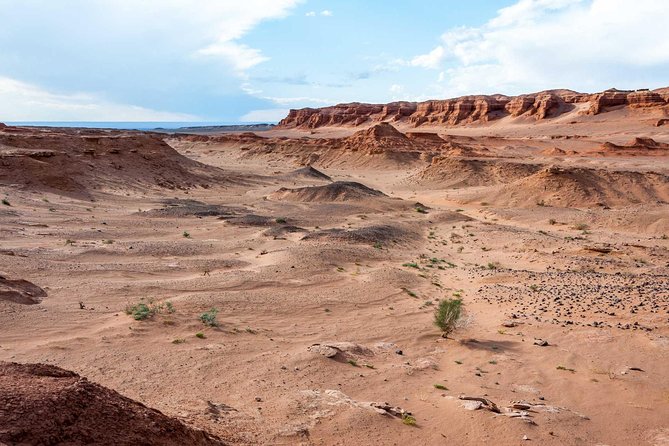
Yoliin Am, also called Yol Valley, cuts through the Zuun Saikhan Mountains, where the surrounding peaks reach 2,815 meters above sea level. The gorge has steep rocky walls, reaching about 200 meters high in its central section.
The unusual feature is ice within the narrow canyon. The river valley is known for retaining ice, making this a very different experience from the sunbaked cliffs and open desert seen elsewhere on the route.
Yoliin Am has protected status dating to 1965 and now forms part of a 70-square-kilometer Strictly Protected Area. That status gives the stop more weight than a scenic walk. It is also a reminder that the Gobi includes mountain valleys and cooler environments, not only dry open ground.
You will hike here, so the day calls for practical clothing and sturdy footwear. Conditions can vary, and the tour specifically notes that good weather is required for the experience. If poor weather forces a cancellation, the provider offers another date or a full refund.
More Kharkhorin and Karakorum trips:
- 7-Days Central Mongolia Tour and Ancient city in Kharkhorin
★ 4.5 · 5 reviews - Mini Gobi and the ancient capital Kharkhorin – 4 days
★ 5.0 · 3 reviews
Day 4: Climbing the Khongor Els Sand Dunes
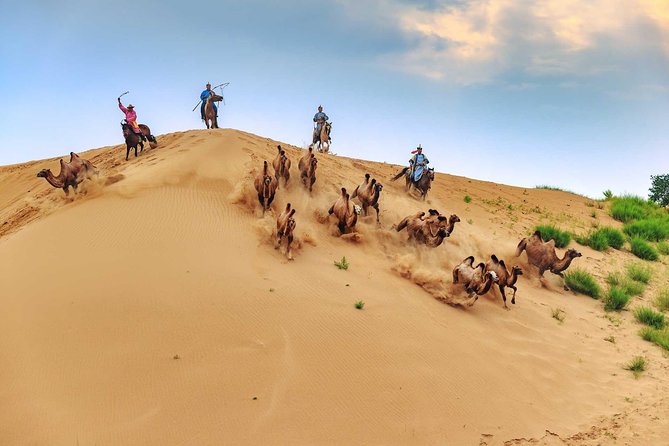
Khongor Els is the big sand-dune day. The dunes extend for about 180 kilometers along the northern side of the Sevree and Zuulen Mountains, creating one of the most dramatic open views in the Gobi.
The description gives the dunes a height of about 15 to 20 meters. That may not sound enormous on paper, but walking on loose sand changes the effort. A short climb can feel much longer, especially under a strong sun. The program includes hiking, climbing to cliffs, and photography, so this is an active stop rather than a roadside look.
Khongor Els makes a good contrast with Tsagaan Suvarga. There, the ground is hard and layered. Here, the surface shifts under your feet and the view changes with every step. You will want your camera ready, but protect it from sand as much as possible.
This is also one of the days when the quality of the guide and driver matters. Good pacing and clear instructions help a small group enjoy the dunes without turning the climb into a race. Bring water and expect the sand to get into places you did not know existed.
Day 5: Dinosaur country at the Flaming Cliffs
Bayanzag is internationally known for dinosaur discoveries, including skeletons, eggs, and hatchlings from the Cretaceous Period. Finds connected with Protoceratops, Oviraptor, and the armored Pinacosaurus date from roughly 70 to 80 million years ago.
The site became famous after explorer Roy Chapman Andrews visited Mongolia in 1922. The red and orange cliffs are the reason for the name Flaming Cliffs, especially when late light catches the rock.
This stop works on two levels. You get a memorable desert setting, but you also get a place tied to major paleontological discoveries. Even if you are not a dinosaur enthusiast, the idea of eggs and hatchlings preserved in this remote part of Mongolia gives the stop real force.
The information provided does not promise a museum collection, excavation demonstration, or guaranteed fossil sightings. Treat Bayanzag as a historic and geological site rather than a fossil-hunting expedition. Your guide can add useful context, while your main activity will be walking and taking photographs.
Day 6: Ongi Monastery beside the river
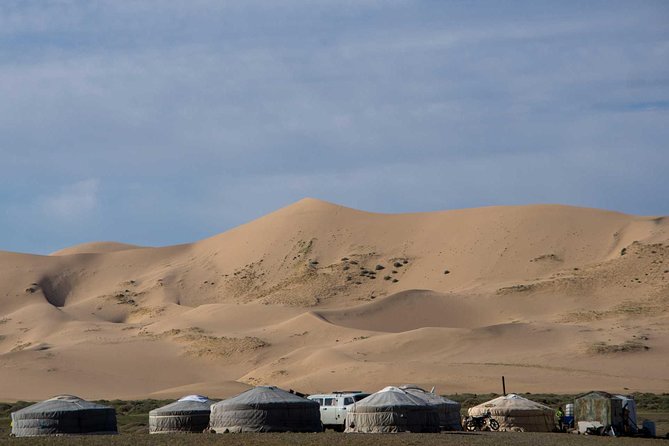
The road then leads to Ongi Monastery, or Ongi Temple, founded in the 1760s by Bari Yonzon Khamba beside the Ongi River. At its height, the religious complex included about 30 temples and more than 1,000 monks.
Today, only a few monks carry out its functions, but the site remains active. That makes it more meaningful than a completely abandoned ruin. You can see how a major Buddhist center once shaped life in this remote area, then consider how much changed over time.
The program lists hiking, visiting a natural wonder, climbing to cliffs, and photography. The combination of river, mountains, and monastery gives you a slower and more reflective day after the famous desert stops.
You stay in a family yurt or tourist camp. This is one of the more authentic parts of the trip, but it also requires realistic expectations. A yurt is not automatically a hotel room with hotel services. The benefit is the setting and local character. The tradeoff is that facilities and privacy may be basic.
Day 7: Kharkhorin and the old imperial capital
Kharkhorin, also written Kharakhorum, was established in 1220 and served as the capital of the Great Mongolian Empire. Chinggis Khaan and later rulers, including Ugudei, Guyug, and Munkh, lived and governed here.
The city was destroyed by soldiers of China’s Ming Dynasty in the 14th century. Its ruins have been protected since 1961, and the site received UNESCO World Heritage status in 1996.
The tour continues to Erdenezuu Monastery, where you can see tombs, temples, and an active Buddhist temple. You also visit the Wall of the Mongolian Empire and learn more about the old capital and its surroundings.
This day gives the route historical balance. The Gobi stops focus on geology and ancient life. Kharkhorin shifts the focus to empire, religion, and Mongolia’s later cultural story. If you want a trip with more than scenery, this is an important part of the program.
You again stay in a family yurt or tourist camp. The activities include hiking, photography, visiting a natural site, and exploring the surrounding area. The available information does not state how much time is spent at each monument, so you should ask the provider if a particular monastery or museum visit matters most to you.
Day 8: Back to Ulaanbaatar and Mongolian cashmere
The final day returns you to Ulaanbaatar. Rather than ending with a simple hotel drop-off, the program includes shopping at factory stores for Goyo and Gobi, two of Mongolia’s best-known cashmere brands.
That can be a useful final stop if you want a practical souvenir. Cashmere is one of Mongolia’s signature products, and factory stores give you a chance to compare items before leaving. It also offers a change of pace after a week of remote roads, camp stays, and outdoor sites.
The exact arrival time is not given. Keep that in mind if you have a same-day flight or another fixed appointment. A long return drive can be affected by road conditions, so leave a sensible gap before your next commitment.
Yurts, camps, meals, and the value of $1,693
At $1,693 per person, this tour is not the cheapest way to see Mongolia. Its value depends on what you would otherwise need to arrange yourself: a private vehicle, driver, guide, fuel, accommodation across several remote areas, meals, and visits to distant cultural and natural sites.
Seven breakfasts, seven dinners, and eight lunches are included. That removes much of the daily food planning, which is useful when the route passes through areas with few services. Alcoholic drinks cost extra, and no other excluded meal or drink details are provided.
Accommodation is in family yurts or tourist camps. This suits people who want a direct connection with Mongolian travel traditions and do not need polished hotel facilities every night. If you need dependable private-room comforts, ask for the exact camp arrangements before paying.
The strongest practical praise goes to organization, the tour guide, and the driver. A five-star account specifically credits Enza Tours for these points, while the response from Enkhzaya Ganbold is warm and personal. That is encouraging because the guide and driver can make a major difference on a route where timing, roads, and remote stops shape every day.
Who should book this Gobi route?
I would recommend it to you if you want Mongolia’s major Gobi sights in one organized trip and prefer not to manage remote transport alone. It suits active people who enjoy hiking, photography, long drives, basic camps, and a changing program.
It is also a good fit if you want a mix of nature and culture. You will see granite mountains, fossil cliffs, ice in a mountain gorge, sand dunes, dinosaur country, Buddhist sites, and the old imperial capital.
I would be more cautious if you dislike early starts, rough road travel, repeated changes of accommodation, or basic facilities. The tour has a full schedule, and the information supplied does not give exact driving times or room arrangements. Ask those questions before booking.
The experience is private to your group, with a maximum group size of 10 stated. That should feel more personal than a large coach tour, while still giving you the energy and cost sharing of a small party.
Cancellation terms are worth noting. A full refund requires cancellation at least six full days before the start time. Cancellation two to six days ahead receives a 50 percent refund, while cancellations less than two full days before departure are not refunded. Changes follow the same cutoffs, and poor weather may lead to another date or a full refund.
Should you book the 8 Days Tour?
Book this tour if you want a well-rounded first look at the Gobi Desert and Kharkhorin, with transport, most meals, accommodation, and a small group handled for you. The route has excellent variety, and the combination of dunes, cliffs, dinosaurs, monasteries, and imperial history gives you plenty to remember.
Before booking, confirm the expected driving hours, yurt facilities, and pickup details. If those basics suit you, the $1,693 price can be fair for an eight-day remote journey with a guide and driver. If you want a slower holiday or hotel-level comfort, choose a shorter or more comfortable Mongolia itinerary instead.
FAQ
What is included in the tour price?
The tour includes accommodation, round-trip transfers from Ulaanbaatar, seven breakfasts, seven dinners, and eight lunches. Alcoholic drinks are not included.
How large is the group?
The tour is described as a small-group experience with no more than 10 people. It is also listed as a private activity, meaning only your group participates.
What time does the tour start?
The stated start time is 7:30 a.m. Pickup is offered from Ulaanbaatar.
Where do you stay during the tour?
Accommodation is provided in family yurts or tourist camps. The itinerary specifically lists these stays for Ongi Temple and Kharkhorin, and they form part of the trip’s accommodation plan.
Can most people take part?
Yes. The activity information says most people can participate. The program includes hiking and climbing, so you should be prepared for outdoor walking and uneven ground.
What happens if bad weather cancels the tour?
The experience requires good weather. If poor weather causes cancellation, you will be offered another date or a full refund.
Newly listed around Ulaanbaatar
- Ulaanbaatar Signature Tour – Mongolia’s Capital in One Day★ 4.3 · 3 reviews
- VIP Pick Up Or Drop Off Airport Transfer In Ulaanbaatar City (UB)★ 5.0 · 2 reviews
- Ulaanbaatar: 4-Day Central Mongolia Winter Tour★ 5.0 · 3 reviews
- Ulaanbaatar: Chinggis Khaan Museum Highlights Private Tour★ 5.0 · 2 reviews
- Private – Ulaanbaatar City Tour★ 3.5 · 3 reviews
- Private Transfer between New Ulaanbaatar International Airport and Ulaanbaatar★ 5.0 · 4 reviews
- Transfer service to Terelj national park★ 5.0 · 3 reviews
- A Day Authentic Mongolian Trip near Ulaanbaatar all-inclusive★ 5.0 · 3 reviews
Kharkhorin Tours, compared.
7-Days Central Mongolia Tour and Ancient city in Kharkhorin
Read our review →
Mini Gobi and the ancient capital Kharkhorin – 4 days
Read our review →Browse the lists this tour appears in