
Reviewed · KHARKHORIN TOURS
7-Days Central Mongolia Tour and Ancient city in Kharkhorin
Mongolia gets wide fast. This seven-day private journey pairs Karakorum and Erdene Zuu with wild horses, open steppe, a Buddhist temple, camel riding, and nights in traditional ger camps. I like the strong mix of history and outdoor scenery, and I like that airport pickup, private transport, guides, riding activities, and most meals are included. The tradeoff is a demanding schedule with long road days, and your Ulaanbaatar hotels are not included in the $1,503 price.
I also like the human side of the route. You visit a nomad family near Elsen Tasarkhai, help prepare a Mongolian barbecue, and sleep four nights in selected ger camps plus one night in a luxury camp. Just keep expectations practical: this is a road-based tour across central Mongolia, not a slow retreat, and WiFi, drinks, insurance, visas, and personal expenses cost extra.
In This Review
- Key points worth knowing before you book
- What $1,503 buys you across seven days
- Day 1: Ulaanbaatar gives you a quick cultural start
- Day 2: Chinggis Khan, Turtle Rock, and Aryabal Temple
- Day 3: Hustai National Park and Mongolia’s wild horses
- Day 4: Turkic archaeology and a slower hour at Ugii Lake
- Day 5: Karakorum and the quiet power of Erdene Zuu
- Day 6: Elsen Tasarkhai, camels, and a night with a nomad family
- Day 7: The long return and time for Ulaanbaatar shopping
- Guides, drivers, and the private touring style
- Meals, camps, and what to pack
- Who should book this seven-day route?
- Should you book it?
- FAQ
- Where does the tour start?
- How long does the experience last?
- Is this a private tour?
- Are Ulaanbaatar hotels included?
- How many nights are spent in ger camps?
- Are horse and camel rides included?
- Are meals included?
- Can I cancel for a full refund?
Key points worth knowing before you book
- Karakorum connects Mongolia’s past to the present: See the old capital of the Mongol Empire and nearby Erdene Zuu, Mongolia’s oldest monastery.
- Przewalski horses are a major highlight: Hustai National Park protects the only wild horses known to survive into modern times.
- You get several classic Mongolian experiences: Ride horses near Turtle Rock, ride two-humped camels, stay in gers, and share time with a nomad family.
- The private format gives your group breathing room: Only your party participates, with an English-speaking guide and private vehicle.
- The route includes long drives: Day 3 takes about eight hours, Day 6 also takes about eight hours, and the return to Ulaanbaatar covers 285 kilometers on paved road.
- The price covers a lot, but not everything: Accommodation, transport, activities, and listed meals are included, while Ulaanbaatar hotels and several travel costs are not.
What $1,503 buys you across seven days
At $1,503 per person, this tour is not a cheap way to see Mongolia, but the value improves when you count what is bundled into the price. You receive private transportation, an English-speaking guide, all listed accommodation, entrance fees, horse and camel rides, breakfast five times, lunch seven times, and dinner five times.
Airport or railway station pickup and return service also help. Ulaanbaatar can be a useful starting point for a first visit, but arranging transfers and the first hotel night separately takes time. This package removes much of that early guesswork.
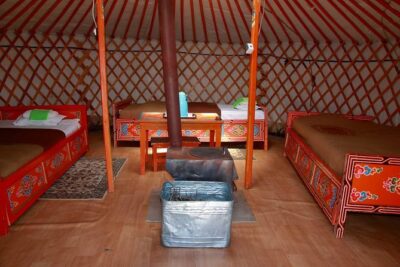
The biggest question is your accommodation expectation. Four nights are in Mongolian ger camps, while one night is in a luxury camp. A ger is a round felt dwelling central to Mongolian nomadic culture, but a camp stay is still more basic than a city hotel. The information provided does not specify bathroom arrangements, heating, or room setup, so ask the operator before paying if those points matter to you.
Your Ulaanbaatar hotels are not included. That means you need to budget for the hotel before the tour starts, the hotel after the tour ends, or both, depending on your travel plans. International flights, visa fees, travel and medical insurance, alcoholic drinks, beverages, personal items, and onboard WiFi are also outside the price.
The private format is useful for couples, families, or friends who want to set their own pace within a fixed route. It also means the price may make more sense for a small group than for one person traveling alone. Group discounts are offered, so ask about the current rate if you are booking with several people.
More Kharkhorin and Karakorum trips:
- From Ulaanbaatar: Semi Gobi, Nomads, Ancient Kharkhorin Tour
★ 4.6 · 84 reviews - 8 Days Tour: Gobi Desert And Kharkhorin
★ 5.0 · 10 reviews - Mini Gobi and the ancient capital Kharkhorin – 4 days
★ 5.0 · 3 reviews
Day 1: Ulaanbaatar gives you a quick cultural start
Your arrival day begins with pickup at Buyant Uhaa Airport at the stated 9:00 am meeting time. You are taken to your hotel, then spend up to eight hours on a city tour.
The stops include Sukhbaatar Square, the National Museum of Mongolia, and Gandan Monastery. This is a sensible introduction before heading into the countryside. Sukhbaatar Square gives you a central reference point in the capital, while the museum provides context for Mongolia’s ancient past, empire period, and more recent history.
Gandan Monastery brings religious life into the picture. Mongolia’s Buddhist traditions are important to understanding later stops, especially Aryabal Meditation Temple and Erdene Zuu. The first day is not merely a transfer day, though the full schedule may feel heavy if your flight arrives early that morning.
The tour includes airport pickup, but the provided details say Ulaanbaatar city hotels are not included. Confirm where you will stay and how the first night connects to the organized route. That small bit of planning can prevent a confusing start.
Day 2: Chinggis Khan, Turtle Rock, and Aryabal Temple
Day 2 packs three major stops into one full outing. First comes the Chinggis Khaan Statue Complex, about two hours from the itinerary schedule. The stainless steel equestrian statue is 40 meters tall and points east toward Chinggis Khan’s birthplace. It sits beside the Tuul River at Tsonjin Boldog.
The statue is intentionally grand. You can climb inside the complex for views and a closer look at the monument, although the provided details do not specify exactly which interior areas are included. The main value here is symbolic: Mongolia presents its national founder on a scale that matches the country’s sense of history.
Next, you drive into Gorkhi-Terelj National Park. The scenery changes sharply from city streets to open hills and unusual rock formations. Turtle Rock is the recognizable centerpiece, and the tour includes horseback riding near the formations.
I would treat the riding as an introductory activity unless the operator tells you otherwise. The schedule allows about three hours at the park, which includes time for sightseeing and horseback riding rather than a long equestrian excursion. Wear trousers and shoes that can handle dust, and bring a layer for changing weather.
Aryabal Meditation Temple takes another three hours. Built in 1810, destroyed during the religious purge of 1938, and restored in 2004, it offers a clear link between Mongolia’s Buddhist past and its present religious life. You hike uphill to the temple, so this stop requires more effort than a quick roadside photo.
The walk is part of the appeal. You get views from the hill and a quieter setting after the large statue and busy road schedule. If steep walking is difficult for you, ask the guide about the climb before the day begins.
Day 3: Hustai National Park and Mongolia’s wild horses
Hustai National Park takes up most of Day 3, with about eight hours scheduled. It lies west of Ulaanbaatar and is known for wildlife, historical monuments, and the return of Przewalski horses, called takhi in Mongolian.
These horses are the star of the day. They are described as the only wild horses to survive in modern times, which makes seeing them more than a standard wildlife stop. You are not promised a close sighting, and the animals remain wild, so bring patience and keep your expectations realistic.
Hustai also includes the Ungut monuments, known for man-like figures, sepultures, and rectangular tombs. That combination gives the day more depth than a simple nature drive. You are looking at both living wildlife and traces of older cultures.
A full day in a national park can be rewarding, but the road time matters. The tour moves west from the capital and later continues toward central Mongolia, so this is one of the days when you should pack water, snacks for personal use, and anything you need during long stretches in the vehicle. Lunch is included every day, but the package does not promise beverages or personal refreshments.
More central Mongolia routes:
- From Ulaanbaatar: Central Mongolia Guided 3-Day Tour
★ 4.6 · 186 reviews - Ulaanbaatar: Small Group 3-Day Best of Central Mongolia Tour
★ 4.1 · 171 reviews - Central Mongolia Guided 3-Day Comfortable Tour
★ 4.5 · 37 reviews - 4 Day Best of Central Mongolia tour, Chinggis Khan statue
★ 4.8 · 21 reviews
Day 4: Turkic archaeology and a slower hour at Ugii Lake
Day 4 shifts from horses and monuments to water and archaeology. You drive to Ugii Lake after breakfast, with about five hours scheduled at the lake. The activities listed include a boat tour and horse riding.
Ugii Lake offers a change of rhythm. After several days of roads and cultural sites, the chance to sit near the water can feel welcome. The tour does not state whether the boat ride is included in the price, so ask for clarification if this activity is important to you. Horse riding is included as part of the trip package, but the exact duration is not provided.
The Khushuu Tsaidam area adds a historical stop on the way. Its museum holds artifacts collected from the ruins of the Turkic State. This is an excellent pairing with Karakorum because it shows that the Mongol Empire was not the only major power to shape central Mongolia.
The day’s schedule is somewhat less compressed than Day 2, at least on paper. Still, rural roads and stops can affect timing. Keep your plans flexible and do not count on arriving at the next camp at a precise hour.
Day 5: Karakorum and the quiet power of Erdene Zuu
Karakorum, also written Kharkhorin or Harhorin, is the historical heart of this tour. It served as the capital of the Mongol Empire during the 13th and 14th centuries. Today, much of the ancient city is gone, and the open ruins can feel modest compared with the importance of the place.
That contrast is exactly why the stop works. You are not walking through a fully preserved medieval city. You are standing on the site of an imperial center and using the surrounding museum displays, monuments, and nearby religious complex to picture what once stood here.
The schedule gives about four hours for Karakorum. Use that time to listen closely to your guide. The ruins make more sense when someone explains the site’s role, rather than leaving you to inspect scattered remains without context.
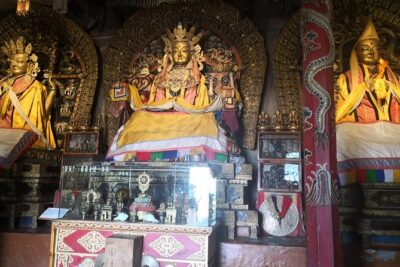
Erdene Zuu Monastery receives another four hours. It is the oldest monastery in Mongolia and is located near the ruins of Karakorum. The complex reflects Mongolian Buddhist architecture and religious history, making it one of the most important cultural stops on the route.
This is one of the strongest days for anyone who wants more than scenery. You get the Mongol Empire, Turkic connections from the previous day, and the religious story that continues into modern Mongolia. The visit is also a reminder that Mongolia’s past is not limited to Chinggis Khan.
Day 6: Elsen Tasarkhai, camels, and a night with a nomad family
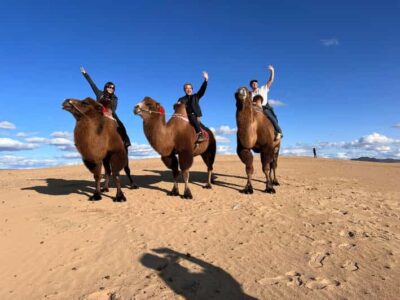
Day 6 takes you to Elsen Tasarkhai, a semi-desert area. The planned day lasts about eight hours and includes a visit to a local nomad family, a ride on two-humped camels, and participation in daily family life.
The Bactrian camel ride is one of the most distinctive activities on the route. Two-humped camels are closely tied to Mongolia’s dry regions, and riding one gives you a direct experience that a museum cannot provide. The operator does not specify the ride length, aside from the itinerary’s note about camel riding, so ask if you need a set duration.
The family visit is likely to be the most personal part of the trip. You are not simply stopping to take a photograph. The plan includes helping prepare a traditional Mongolian barbecue under the family’s instruction. That hands-on meal gives the evening a clear purpose and lets you see how hospitality fits into rural life.
You should also prepare for a basic night. Ger camps can vary widely, and the information does not list the exact facilities at this location. Pack a small overnight bag with warm layers and personal essentials rather than relying on city-style convenience.
This is the day that best suits people who want contact with everyday rural life. It also requires courtesy. Follow your guide’s advice about entering the ger, handling food, and interacting with the family. A respectful visit is more rewarding than treating the stop like a staged performance.
Day 7: The long return and time for Ulaanbaatar shopping
The final day returns you to Ulaanbaatar. The route covers 285 kilometers on paved road, with about five hours listed for the day. That is a relatively manageable finish after the long rural drives earlier in the week.
You have time for souvenirs and cashmere in the capital. Cashmere is one of Mongolia’s best-known products, but the tour does not specify particular shops or a shopping guide. Compare prices, check garment labels, and leave room in your luggage.
Because international flights and Ulaanbaatar hotels are not included, do not schedule your departure too tightly unless the operator confirms the timing. The tour ends back in the capital, but your onward arrangements are your responsibility.
Guides, drivers, and the private touring style
The tour includes an English-speaking guide and private transportation. That combination matters in Mongolia, where distances are large and roads can make even a short map distance feel substantial.
Past trips connected with this operator have included guide Zolboo and driver Bagii, both praised for friendly, efficient service, and guide Daria, who was described as helpful and caring. Your assigned staff may be different, but those names give you an idea of the personal service the company has provided.
The tour is private, meaning only your group participates. You will not be placed with a large busload of strangers, and you can raise questions directly with your guide. Group discounts may make the private setup especially practical for friends or families traveling together.
The air-conditioned vehicle is a useful inclusion. Still, air conditioning does not change the fact that several days involve long drives. Bring a neck pillow, refillable water container, charging equipment, and layers that you can add or remove.
Meals, camps, and what to pack
Breakfast is included five times, lunch seven times, and dinner five times. The included barbecue evening is the most distinctive meal, while other meals are part of the travel plan rather than a separate food tour.
Alcoholic drinks and beverages are excluded. Personal snacks and drinks are sensible additions for the road, especially on the eight-hour days. WiFi is not provided onboard, so download maps, translation tools, and entertainment before leaving the city.
A useful packing list includes:
- Warm layers for ger camps and evening stops
- Comfortable shoes for the Aryabal Temple hike
- Sun protection for open steppe and semi-desert areas
- Clothing suitable for horseback and camel riding
- A small overnight bag for camp stays
- Cash for personal purchases, drinks, and souvenirs
- Travel and medical insurance documents
The exact sleeping arrangements, bathroom setup, and camp services are not specified. Ask about these before booking if you need private facilities or particular comfort standards.
Who should book this seven-day route?
I would recommend it to first-time visitors who want a broad introduction to central Mongolia without arranging every driver, camp, entrance fee, and ride themselves. It covers history, religion, wildlife, outdoor activities, and family life in a single week.
It also suits people who value private guiding. Couples, families, and small groups can make better use of the format than solo travelers on a tight budget, especially if a group discount applies.
I would hesitate to recommend it to anyone who dislikes long road journeys, basic camp accommodation, or changing scenery without a fixed urban schedule. This is not a relaxed hotel-based holiday. You spend much of the week moving between distant places.
Free cancellation is available if you cancel at least 24 hours before the local start time. Changes made inside that window are not accepted, and the operator may cancel if the minimum number of participants is not reached. In that case, you are offered another date or experience, or a full refund.
Should you book it?
Book this tour if you want Mongolia’s major central highlights in one organized package and you are happy to trade hotel comfort for ger camps and time on the road. The strongest reasons are the private vehicle, the English-speaking guide, Karakorum, Erdene Zuu, Przewalski horses, camel riding, and the nomad family visit.
Think twice if you want a slow itinerary or need polished accommodation every night. Before paying, confirm your Ulaanbaatar hotel plans, camp facilities, boat ride costs, exact riding times, and departure-day timing. With those details clear, the tour offers a substantial and well-rounded introduction to Mongolia for seven days.
FAQ
Where does the tour start?
The tour starts at Buyant Uhaa Airport in Ulaanbaatar, Mongolia, with a stated start time of 9:00 am. Pickup is also offered from the airport or railway station.
How long does the experience last?
The tour lasts seven days.
Is this a private tour?
Yes. Only your group participates in the activity.
Are Ulaanbaatar hotels included?
No. Hotels in Ulaanbaatar city are not included in the tour price.
How many nights are spent in ger camps?
You spend four nights in selected Mongolian ger camps and one night in a luxury camp.
Are horse and camel rides included?
Yes. Horse riding and camel riding are included. The itinerary includes horseback riding near Turtle Rock and two-humped camel riding at Elsen Tasarkhai.
Are meals included?
Breakfast is included five times, lunch seven times, and dinner five times. Alcoholic drinks and other beverages are not included.
Can I cancel for a full refund?
Yes, if you cancel at least 24 hours before the experience start time. Cancellations or changes made less than 24 hours before the start are not accepted for a refund.
Newly listed around Ulaanbaatar
- Ulaanbaatar Signature Tour – Mongolia’s Capital in One Day★ 4.3 · 3 reviews
- Ulaanbaatar: 4-Day Central Mongolia Winter Tour★ 5.0 · 3 reviews
- Ulaanbaatar: Chinggis Khaan Museum Highlights Private Tour★ 5.0 · 2 reviews
- VIP Pick Up Or Drop Off Airport Transfer In Ulaanbaatar City (UB)★ 5.0 · 2 reviews
- Private Transfer between New Ulaanbaatar International Airport and Ulaanbaatar★ 5.0 · 4 reviews
- Private – Ulaanbaatar City Tour★ 3.5 · 3 reviews
- Transfer service to Terelj national park★ 5.0 · 3 reviews
- A Day Authentic Mongolian Trip near Ulaanbaatar all-inclusive★ 5.0 · 3 reviews
Kharkhorin Tours, compared.
Mini Gobi and the ancient capital Kharkhorin – 4 days
Read our review →Browse the lists this tour appears in