
Reviewed · GOBI DESERT TOURS
Mysteries of the Gobi Desert
The Gobi rewards patience. This 11-day private tour from Ulaanbaatar combines huge empty spaces, dinosaur country, Buddhist monasteries, ancient capitals, and nights in traditional ger camps. You travel by private 4WD with a local English-speaking guide, so the trip can feel more personal than a large coach tour.
I especially like the excellent range of sights, from the red Flaming Cliffs and Khongorin Els dunes to Karakorum and Hustai National Park. I also like the practical inclusions: accommodation, nearly all meals, drinking water, entrance fees, transfers, and a private vehicle. The main drawback is the amount of driving. Several days involve long hours on rough desert roads, and some stops require moderate hiking.
This is a strong choice if you want Mongolia beyond Ulaanbaatar and prefer having transport and arrangements handled for you. It is less suitable if you want a relaxed holiday with short travel days, luxury hotels, or a fixed urban schedule.
In This Review
- Five details that shape the experience
- What the $2,025 price really buys you
- Arrival in Ulaanbaatar and the first look at Mongolia
- Baga Gazarin Chuluu and the first ger camp
- Tsagaan Suvraga and the colors of the desert
- Dalanzadgad and Gobi Gurvansaikhan National Park
- Petroglyphs and the singing dunes of Khongorin Els
- Flaming Cliffs and the story beneath the ground
- From desert to the Orkhon Valley
- Red Waterfall and the climb to Tuvkhon Monastery
- Karakorum, Erden Zuu, and Mongolia’s wild horses
- Nomadic life and the final day in Ulaanbaatar
- What the private format does best
- Who should book this Gobi tour?
- Should you book Mysteries of the Gobi Desert?
- FAQ
- How long is the Mysteries of the Gobi Desert tour?
- What is included in the tour price?
- Are meals included every day?
- What type of accommodation is provided?
- Is this a private tour?
- How physically demanding is the tour?
- Does the tour include travel to Mongolia and a visa?
Five details that shape the experience
- Private 4WD travel: Your own vehicle and guide make remote desert travel possible without joining a large group.
- A full Gobi circuit: The route includes Baga Gazarin Chuluu, Tsagaan Suvraga, Gobi Gurvansaikhan National Park, Khongorin Els, Bayan Zag, and Ongiin Khiid.
- Ger camp nights: You sleep in traditional felt dwellings, with simple comfort and a direct connection to nomadic culture.
- Ancient Mongolia beyond the desert: The trip continues to the Orkhon Valley, Tuvkhon Monastery, Karakorum, and Erden Zuu.
- Wild horses near Ulaanbaatar: Hustai National Park adds a chance to see the world’s last surviving wild horses in a protected area.
- Useful inclusions: Eleven breakfasts, ten lunches, ten dinners, water, entrance fees, accommodation, transfers, and a local English-speaking guide are covered.
What the $2,025 price really buys you
At $2,025, this is not a cheap overland trip. It is also more than a basic sightseeing package. You are paying for 11 days of private transport across a country where distances are enormous, roads can be rough, and many major sights are far from regular public transport.
The value comes from the combination of a private 4WD, a driver, an English-speaking guide, accommodation, meals, water, entrance fees, and airport transfers. You do not need to arrange a separate vehicle for the Gobi, negotiate each camp stay, or work out how to connect the southern desert with central Mongolia and Ulaanbaatar.
The private format matters. In a large group, a stop at a rock formation or petroglyph site can feel rushed. Here, your own group can ask questions, spend more time at a viewpoint, or adjust the pace within the limits of the day. The tour is still structured, but you avoid the social and timing demands of a big bus.
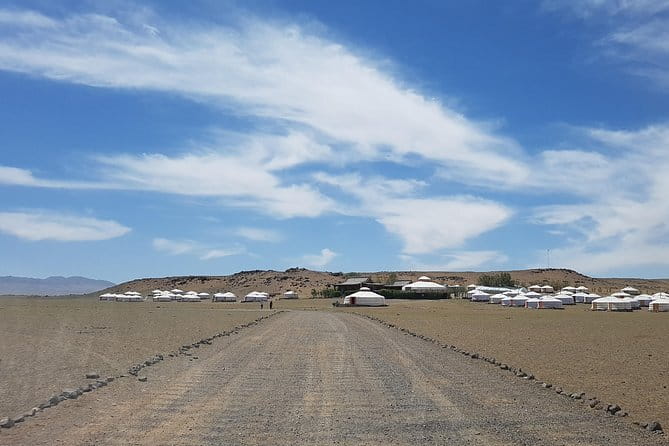
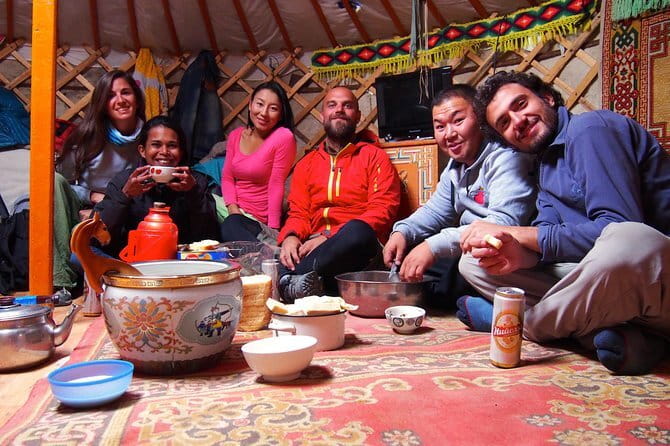
Accommodation is practical rather than luxurious. You stay in hotels in the capital and in ger camps in rural areas. A ger is a round, felt-covered dwelling traditionally used by Mongolian nomadic families. It is an important part of the experience, but you should expect simple lodge-style comfort, not a resort room.
Most meals are included, which is useful because remote parts of the Gobi offer few independent dining choices. Travel to Mongolia, insurance, the visa, and excess luggage are not included. The tour is non-refundable and cannot be changed after booking, so confirm your flights, visa requirements, dates, and travel insurance before paying.
More Gobi Desert trips:
- Ulaanbaatar: Semi-Gobi Desert Day Trip & Camel Ride
★ 4.0 · 92 reviews - From Ulaanbaatar: Semi Gobi, Nomads, Ancient Kharkhorin Tour
★ 4.6 · 84 reviews - 1 Day Semi-Gobi All-included tour
★ 4.0 · 69 reviews
Arrival in Ulaanbaatar and the first look at Mongolia
Day one begins with an airport meeting at 2 pm, followed by a drive into Ulaanbaatar. The road gives you an immediate introduction to the country’s recent changes. You pass a shanty district inhabited by former nomads who moved toward the capital, then newer shopping centers, apartment developments, and older Soviet-era buildings.
If time permits, you get an orientation walk around the central square. The statue of D. Sukhbaatar provides a quick introduction to modern Mongolian national identity, while the surrounding streets show how quickly the capital is changing.
Do not expect a full city tour on arrival day. The emphasis is on meeting the guide, reaching the hotel, and getting ready for the road. That is sensible after an international flight. The tour’s listed start time is 7 am, while the arrival plan specifies a 2 pm airport meeting, so confirm the exact pickup time for your booking.
Baga Gazarin Chuluu and the first ger camp
On day two, the city gives way to open steppe as you drive south toward Baga Gazarin Chuluu. The name means Small Place of Stones, but the formations are anything but small. Granite rocks rise from the dry grasslands in unusual shapes, creating one of the trip’s first major geological surprises.
The area also has religious importance. A monastery destroyed during the communist purges of the 1930s is being reconstructed, giving you a direct connection to Mongolia’s Buddhist revival. Monks are involved in the restoration, and nearby water sources still attract nomadic families during the summer.
This is one of the better places to learn about modern nomadic life, because the setting is not staged as a museum. If the visit is arranged during the right season, you may meet families who still move with their animals and manage life around scarce water.
Your first night in a ger camp sets expectations for the rest of the trip. The setting is memorable, but the accommodation is basic. Pack a small overnight bag so you are not constantly searching through large luggage inside a compact ger.
Tsagaan Suvraga and the colors of the desert
Day three begins with a morning prayer service at the rebuilt temple. The chanting of Tibetan Buddhist prayers offers a quieter experience than the major monastery visits later in the trip. Be respectful during the service and follow your guide’s advice about where to sit or stand.
The route then continues to Tsagaan Suvraga, or White Stupa. The name sounds as if you are heading toward a monument, but the attraction is a natural formation of colorful sandstone. Erosion has shaped the cliffs and mounds into bands of pale, orange, and reddish earth.
A hike to a viewpoint gives you the best sense of the scale. This is a scenic stop rather than a place packed with facilities, so sturdy shoes, sun protection, and water are useful. The rock colors change with the light, and an afternoon arrival can make the formations especially striking.
The broader setting also raises an important issue. Mineral deposits have helped drive Mongolia’s modern mining rush. The same desert that offers extraordinary scenery is being examined for gold and other resources, and mining activity has affected water supplies in parts of the Gobi.
A few more Ulaanbaatar departures worth comparing
- From Ulaanbaatar: Genghis Khan Statue NationalPark CamelRide
★ 4.8 · 353 reviews - Genghis Khan Statue Day Tour+National Park+Camel Ride+Eagle
★ 4.5 · 261 reviews - From Ulaanbaatar: Central Mongolia Guided 3-Day Tour
★ 4.6 · 186 reviews - Ulaanbaatar: Small Group 3-Day Best of Central Mongolia Tour
★ 4.1 · 171 reviews
Dalanzadgad and Gobi Gurvansaikhan National Park
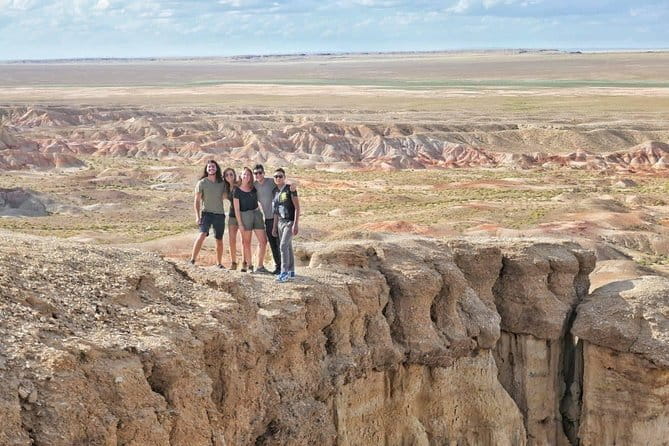
Day four takes you to Dalanzadgad, the capital of South Gobi Province. It is mainly a service and logistics center, not a polished tourist town. Mining has brought roads, machinery, and economic activity, but also environmental pressure.
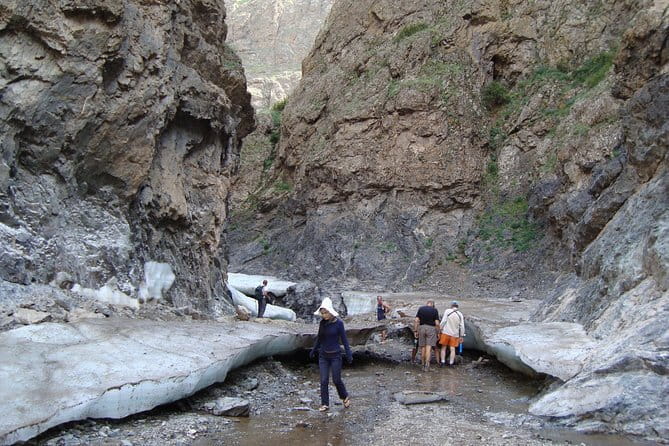
From there, you continue to Gobi Gurvansaikhan National Park, known here as the Gobi’s Beauties Nature Reserve. The Vulture’s Valley is the key stop. This narrow valley at the foot of the Three Beauties mountain range offers a sharp change from open desert to a more sheltered, cooler setting.
The hike is generally manageable for anyone with moderate fitness, but conditions can vary. The tour specifically asks for a moderate physical fitness level, and that is reasonable. You should be comfortable walking on uneven ground, climbing gradually, and spending long periods outside in sun, wind, or cold.
The park is also a good reminder that the Gobi is not simply a sea of sand. Much of it is cold desert steppe, with snow providing a significant share of its moisture. Rock, grass, gravel, dry valleys, and small oases all appear along the route.
Petroglyphs and the singing dunes of Khongorin Els
Day five starts at the Khavtsgait Petroglyphs. The carvings sit on a cliff above the broad Gobi plains and show scenes from the lives of people who lived in the area hundreds or thousands of years ago.
The site requires walking uphill toward the rocks, but the effort gives you two rewards: the ancient carvings and a wide view over the surrounding plains. You will want time to study the images, not simply snap a photograph and leave.
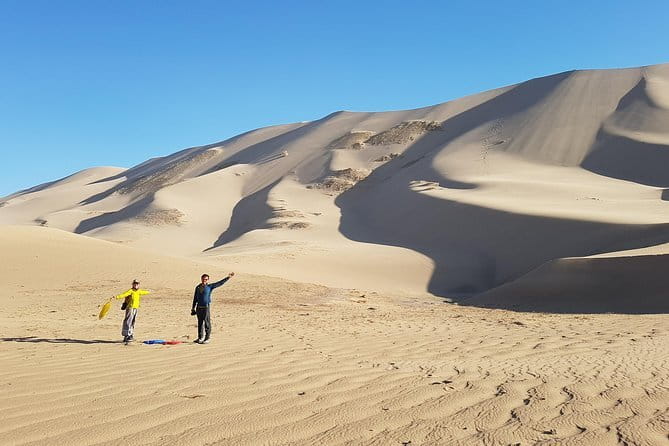
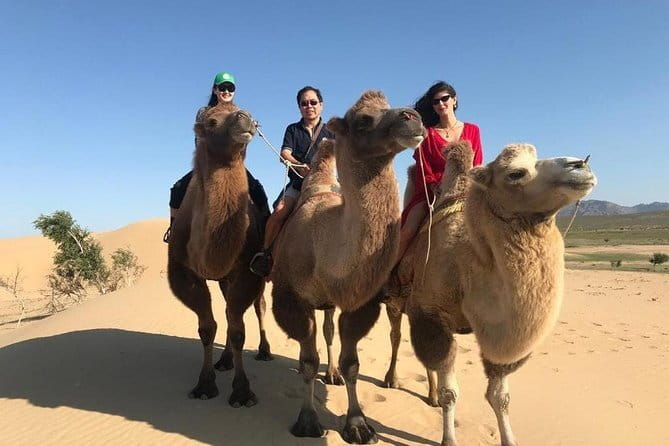
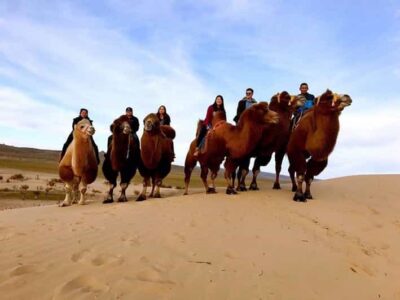
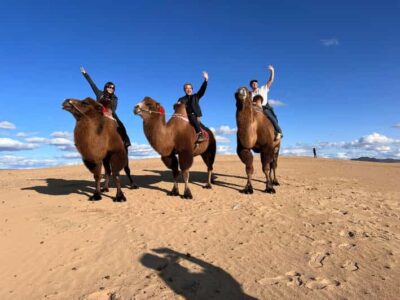
After another long drive, you reach Khongorin Els, the best-known dune area on this route. The dunes are tall, broad, and sharply different from the gravelly desert encountered earlier. You arrive at a ger camp, eat a late lunch, and then walk out onto the sand.
The famous feature here is the possibility of hearing the dunes sing when the wind moves across them. It is not guaranteed, so treat it as a bonus rather than a promised performance. Even in silence, the dunes are impressive, especially when the low plants at their edges show how life survives in this dry country.
This is one of the more physically demanding days because of the long drive and walking on sand. Sand absorbs energy quickly. Bring shoes that fit securely, protect your face from wind, and keep water within reach.
Flaming Cliffs and the story beneath the ground
Bayan Zag, better known as the Flaming Cliffs, is the major stop on day six. The red sandstone becomes orange and crimson in the right light, with the best color often appearing later in the day.
The cliffs are famous not only for their appearance but also for their fossils. In 1921, American explorer Roy Chapman Andrews made major dinosaur discoveries here, helping turn the site into one of the world’s most important dinosaur fossil areas.
A short hike lets you see the formations from ground level. The site is not a theme park with elaborate displays. Its power comes from the terrain itself and the knowledge that important paleontological discoveries were made in these exposed rocks.
The drive afterward is long, taking you to Ongiin Khiid beside the Ongiin River. The monastery was once one of the Gobi’s largest religious centers, but only a smaller complex remains today after the destruction of the communist period.
The river’s reduced flow also shows the cost of mining and water use. The tour does not present the Gobi as untouched wilderness. That honest contrast, ancient monasteries beside modern extraction, adds meaning to the route.
From desert to the Orkhon Valley
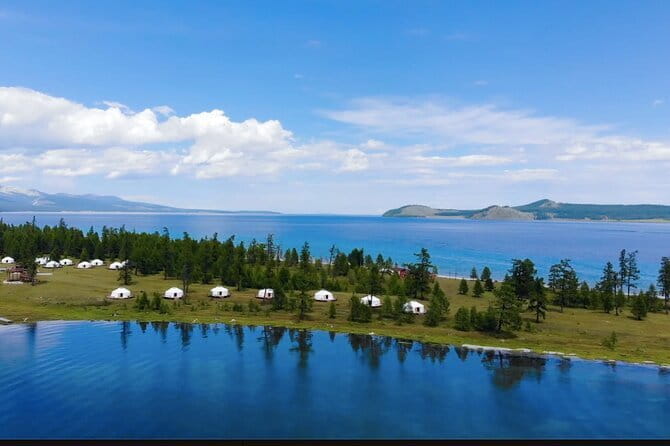
On day seven, the scenery changes steadily as you leave the Gobi and move toward the Mongolian steppes and Khangai Mountains. The dry colors give way to greener grasslands, and birds of prey can be seen over the open country.
The Orkhon River Valley is a UNESCO World Heritage Cultural Landscape. It has served as a center for several kingdoms and empires, including the era of the Mongol Empire. The valley helps explain how nomadic societies organized power, religion, and administration without building cities in the same form as settled civilizations.
This section is valuable because it prevents the trip from becoming only a desert expedition. You see how Mongolia’s environment changes across a relatively short span, from cold desert to open grassland and volcanic country.
Expect another substantial drive. Mongolia’s distances are part of the experience, but they can also become tiring. Use the vehicle time to rest, watch for animals and birds, and ask your guide about the places you are crossing.
Red Waterfall and the climb to Tuvkhon Monastery
Day eight brings one of the tour’s most active outings. You drive to a volcanic canyon cut by the Orkhon River, then hike along the canyon floor to the pool beneath the Red Waterfall.
The walk is described as easy, but the day does not end there. The visit to Tuvkhon Monastery includes a hike of about three and a half hours, with roughly one hour uphill. A swim in the waterfall pool is possible for those who want it, but the water will be cool.
Tuvkhon Monastery occupies a high, secluded site among pine forests. Zanbazar established it in the 1650s, using natural caves and small wooden buildings. Its setting is as important as the structures. The climb helps explain why the place was chosen for religious retreat and protection.
This is the day to take the fitness warning seriously. You do not need to be an expert hiker, but you should be prepared for a sustained uphill section and uneven paths. Afterward, the drive continues toward Kharkhorin, so tired legs are likely.
Karakorum, Erden Zuu, and Mongolia’s wild horses
Karakorum was founded by Chinggis Khan about 800 years ago and became the capital of the Mongol Empire. The ruins are a reminder that the empire’s political center was not only a name from schoolbooks. This was a place where rulers were selected, laws were made, and military decisions shaped much of Asia.
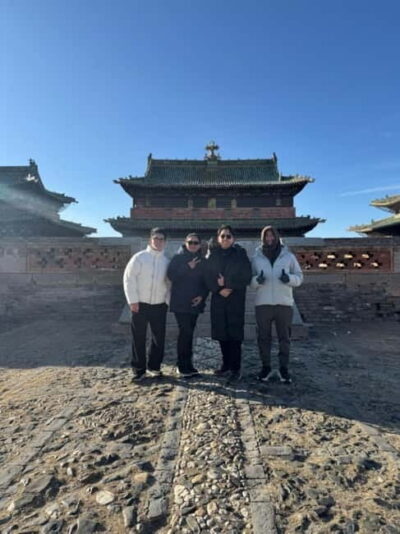
You also visit Erden Zuu Monastery and other nearby monuments. The monastery provides a different view of Mongolia, with Buddhist religious life taking the place of imperial power. Together, the ruins and monastery make this one of the most historically important portions of the trip.
After lunch, you pass Elsiin Tasarkhai, a long belt of sand marking the northern edge of the Gobi. The contrast is striking: the desert is not a single solid block, but a broad zone that changes into steppe and mountain country.
Late in the day, you reach Hustai National Park. The protected area was created as part of a project to reintroduce the world’s last surviving wild horses. It is an excellent final outdoor stop because it brings wildlife into a journey otherwise focused on geology, religion, and history.
Wild animals do not follow a timetable, so sightings cannot be promised. Your private vehicle and guide make it easier to spend time looking across the protected area rather than rushing through it.
Nomadic life and the final day in Ulaanbaatar
Day ten offers a recreation of nomadic life in the early 20th century, when Mongolia regained independence from the Qing Dynasty and established a new national order under a living god-king. Demonstrations explain domestic routines, customs, and traditions that continue today.
This is a useful counterpoint to the remote ger camps. At the camps, you see the setting and hospitality of rural Mongolia. Here, you receive a more organized explanation of how nomadic life worked and how some traditions have continued.
After lunch, you drive back to Ulaanbaatar and visit the Zanbazar Fine Arts Museum. Its collection includes major Mongolian works, including B. Sharav’s One Day in Mongolia, a well-known painting depicting daily life.
The museum is a good final stop because it gives visual shape to many things you have seen from the vehicle: people, animals, work, religious practice, and the open country. Day eleven is simple, with breakfast and an airport transfer for your international flight.
What the private format does best
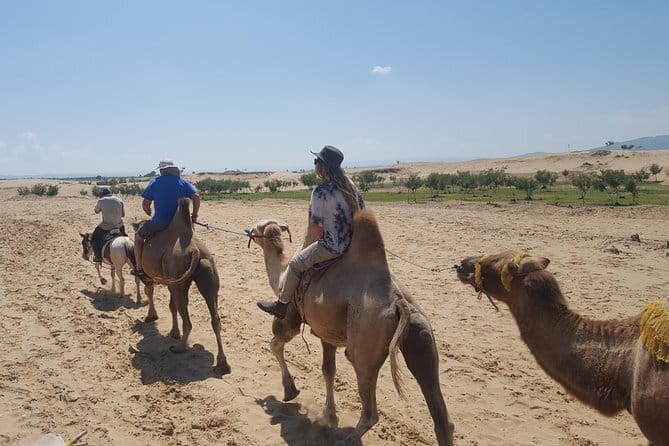
The most praised part of this experience is the operation of the trip itself. One November departure was handled by Mongolian Ways during the off-season, when many companies do not operate. The guide and driver were specifically praised for organization, driving, and translation.
That matters in Mongolia. A long road day can become stressful if meals, camp arrivals, vehicle timing, and local communication are poorly handled. The private format also means you have a direct point of contact instead of trying to solve problems inside a large group.
Tsoggy organized another departure and was described as willing to go out of the way to make arrangements work properly. If Tsoggy is your contact, that personal attention is a useful sign. Still, ask who your individual guide and driver will be before departure, since the supplied information does not name them.
Who should book this Gobi tour?
I would recommend it to you if you want:
- A serious first trip through Mongolia
- Remote desert scenery without arranging transport yourself
- A private guide and vehicle
- Ger camp stays alongside hotel nights
- Dinosaur sites, Buddhist monasteries, ancient capitals, and wildlife
- A route that includes both the Gobi and central Mongolia
I would think twice if you want short transfers, high-end accommodation, or lots of free time. The trip is active, road-heavy, and sometimes physically demanding. It also has a fixed structure, even though private travel gives you more flexibility than a group departure.
Pack for changing conditions, bring shoes for uneven trails and sand, and keep luggage manageable. Confirm the pickup time, visa requirements, and cancellation terms before booking. Because the payment is non-refundable and amendments are not accepted, this is a trip to reserve only when your plans are firm.
Should you book Mysteries of the Gobi Desert?
Book it if the idea of crossing Mongolia by 4WD sounds exciting rather than exhausting. The route gives you a rare mix: red fossil cliffs, singing dunes, ancient rock art, monastery ruins, wild horses, volcanic valleys, and the old capital of Karakorum.
The $2,025 cost is reasonable for a private 11-day trip with transport, guide, accommodation, most meals, water, entrance fees, and transfers included. You are paying for access and logistics as much as for sightseeing.
My main advice is simple: choose this tour for the breadth of the experience, not for comfort or speed. If you can accept long drives and basic ger camps, it offers a thoughtful, well-organized way to see the Gobi and much more of Mongolia.
FAQ
How long is the Mysteries of the Gobi Desert tour?
The tour lasts approximately 11 days, beginning in Ulaanbaatar and ending with an airport transfer on day 11.
What is included in the tour price?
Accommodation, drinking water, a private 4WD vehicle, a local English-speaking guide, entrance fees, transfers, 10 lunches, 11 breakfasts, and 10 dinners are included.
Are meals included every day?
Breakfast is included for all 11 days. Lunch and dinner are included on 10 days each, so not every meal during the entire trip is covered.
What type of accommodation is provided?
The program uses hotels and tourist ger camps. Ger camps are traditional felt dwellings based on the Mongolian nomadic home.
Is this a private tour?
Yes. Only your group participates, and transportation is provided by private 4WD vehicle.
How physically demanding is the tour?
A moderate level of physical fitness is required. Activities include hikes at Tsagaan Suvraga, Khavtsgait Petroglyphs, the Khongorin Els dunes, the Orkhon Valley, and Tuvkhon Monastery. The Tuvkhon hike lasts about three and a half hours and includes approximately one hour uphill.
Does the tour include travel to Mongolia and a visa?
No. International travel, travel insurance, the Mongolian visa, and excess luggage are not included.
Newly listed around Ulaanbaatar
- Ulaanbaatar Signature Tour – Mongolia’s Capital in One Day★ 4.3 · 3 reviews
- VIP Pick Up Or Drop Off Airport Transfer In Ulaanbaatar City (UB)★ 5.0 · 2 reviews
- Ulaanbaatar: 4-Day Central Mongolia Winter Tour★ 5.0 · 3 reviews
- Ulaanbaatar: Chinggis Khaan Museum Highlights Private Tour★ 5.0 · 2 reviews
- Private – Ulaanbaatar City Tour★ 3.5 · 3 reviews
- Private Transfer between New Ulaanbaatar International Airport and Ulaanbaatar★ 5.0 · 4 reviews
- Transfer service to Terelj national park★ 5.0 · 3 reviews
- A Day Authentic Mongolian Trip near Ulaanbaatar all-inclusive★ 5.0 · 3 reviews
Gobi Desert Tours, compared.

Semi-Gobi and Kharkhorum overnight private trip
Read our review →
Travel to Gobi by train Visit World energy Center
Read our review →
Browse the lists this tour appears in