
Reviewed · GOBI DESERT TOURS
7 days Great Gobi Tour
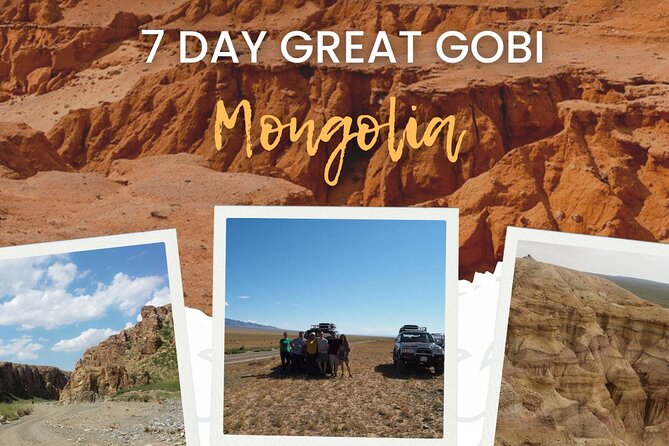
Big skies, long roads, real adventure. This seven-day private tour gives you a strong first taste of southern Mongolia, mixing Gobi desert scenery with nomad life, ancient rock formations, monasteries, and a memorable stay near the dunes. I like the route because each day brings something different, and I like that your own group travels together rather than joining a large coach party.
The trip also benefits from capable local staff. Driver Tomuro is praised for his safe, experienced driving, while guides including Singu Ratler, Saruul, and Nomin have been singled out for their care and flexibility. The main drawback is the amount of driving, and the route can feel a bit touristy at its best-known stops. Vegetarians and vegans should also discuss meals before booking.
In This Review
- The five things I would want to know first
- Why this Gobi route works so well
- Day 1: Granite peaks at Ikh Gazriin Chuluu
- Day 2: The ancient cliff colors of Tsagaan Suvarga
- Day 3: A nomad breakfast and the gorge at Yolin Am
- Day 4: The singing dunes of Khongoriin Els
- Day 5: Bayanzag, then the ruins of Ongi Monastery
- Day 6: Rock art and unusual sights at Baga Gazariin Chuluu
- Day 7: Six hours back to Ulaanbaatar
- Guides, drivers, and the private-tour advantage
- Food and accommodation: useful strengths, one clear warning
- Is $1,400 a fair price?
- Who should book this seven-day adventure?
- Booking, weather, and practical planning
- Should you book the Great Gobi Tour?
- FAQ
- How long is the Great Gobi Tour?
- Where does the tour start?
- What time does the tour begin?
- Where does the tour finish?
- Is this a private tour?
- Is pickup available?
- What happens if bad weather cancels the tour?
The five things I would want to know first
- The route covers seven very different Gobi sights: granite formations, eroded cliffs, an ice field, giant dunes, monastery ruins, and rocky valleys.
- You travel privately with your own group: this makes the long drives easier to manage and gives you more personal attention.
- The nomad connection is part of the appeal: breakfast with a nomad family is scheduled before the visit to Yolin Am.
- The Khongoriin Els dunes are the visual high point: some rise about 200 meters and stretch roughly 12 kilometers wide.
- The final return to Ulaanbaatar takes about six hours: Day 7 is mainly a long drive back, not another major sightseeing day.
- The $1,400 price buys a substantial seven-day experience: its value depends on how much transport, food, lodging, and guiding are included in your booking details.
Why this Gobi route works so well
The Gobi is not one single type of scenery. It is a broad region of stone, sand, open plains, cliffs, valleys, and dry mountain country. This tour gives you a useful sample rather than parking you beside one famous dune for a day and calling it Mongolia.
You begin with Ikh Gazriin Chuluu, a granite mountain reserve. Then the route moves through Tsagaan Suvarga’s pale cliffs, the narrow gorge of Yolin Am, the singing dunes of Khongoriin Els, the remains of Ongi Monastery, and the rock country of Baga Gazariin Chuluu.
That sequence has a pleasing rhythm. You get stone, sediment, ice, sand, religious history, and open desert. The change in scenery helps justify the miles on the road.
This is also a private activity, so only your group participates. That matters in Mongolia, where the roads are long and schedules can shift with conditions. You are not tied to the mood or timetable of a large busload of strangers.
The starting point is Danista Nomads on Orkhon Street 1-37 in Ulaanbaatar. Pickup is offered, and the scheduled start time is 8:30 am. The tour finishes back at the same meeting point on Day 7.
More Gobi Desert trips:
- Ulaanbaatar: Semi-Gobi Desert Day Trip & Camel Ride
★ 4.0 · 92 reviews - From Ulaanbaatar: Semi Gobi, Nomads, Ancient Kharkhorin Tour
★ 4.6 · 84 reviews - 1 Day Semi-Gobi All-included tour
★ 4.0 · 69 reviews
Day 1: Granite peaks at Ikh Gazriin Chuluu
The first stop is Ikh Gazriin Chuluu Nature Reserve, an unusual block of granite rising from the Gobi. Its highest point reaches about 1,706 meters, giving the opening day a more rugged feel than the word desert might suggest.
This is a good first stop because it immediately shows you that the Gobi is not just sand. Granite rocks, mountain forms, and open country create a setting for walking, photography, and quiet observation.
Admission is listed as free. The schedule allows a full day here, which suggests that the reserve is more than a quick roadside photograph. Still, you should expect a day shaped by distance and outdoor conditions rather than a tightly managed attraction with marked facilities.
Bring practical clothing and footwear. The supplied information does not specify the walking distance or trail conditions, so ask the operator what level of walking is planned for your departure.
Day 2: The ancient cliff colors of Tsagaan Suvarga
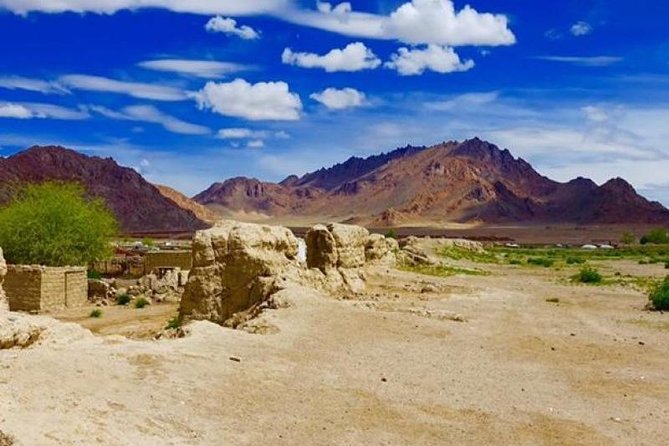
Tsagaan Suvarga means White Stupa, a name given by local people to the striking eroded cliff. Natural forces shaped the formation over roughly 10 million years, leaving exposed layers that show different periods of geological change.
For you, the appeal is visual first. The cliff provides strong color and texture, especially when the sun catches the folds and ridges. It is the sort of place where a guide can add useful context, because the shapes are easy to admire but less easy to understand without an explanation of erosion and time.
Admission is free according to the schedule. Like Ikh Gazriin Chuluu, this is an outdoor stop. The Gobi rewards patience, but it also asks you to accept heat, wind, dust, and long stretches without urban comfort.
I would keep your camera ready, but I would not treat this as a quick checklist stop. The value lies in seeing how different the terrain is from the granite country of Day 1.
Day 3: A nomad breakfast and the gorge at Yolin Am
Day 3 adds the human side of the journey. After breakfast with a nomad family, you drive to Yolin Am, also called Lammergeier Valley, a deep and narrow gorge in the Gurvan Saikhan Mountains of southern Mongolia.
The breakfast is important because it gives the trip a connection to daily life, not just scenery. The information provided does not specify the exact menu or household arrangements, so you should view it as a cultural encounter rather than a staged list of activities. If you have dietary restrictions, tell the operator clearly before departure.
Yolin Am is famous for its cold, narrow gorge and ice field. The route description specifically calls it an ice field, making this one of the tour’s most unusual contrasts: you are in the Gobi, yet the valley can hold ice.
Admission is free. The gorge is likely to feel more enclosed than the broad open spaces elsewhere on the route, which gives the day a different pace. Ask about walking requirements before you set out, since the supplied details do not state how far you will walk or how close the vehicle can get.
A few more Ulaanbaatar departures worth comparing
- From Ulaanbaatar: Genghis Khan Statue NationalPark CamelRide
★ 4.8 · 353 reviews - Genghis Khan Statue Day Tour+National Park+Camel Ride+Eagle
★ 4.5 · 261 reviews - From Ulaanbaatar: Central Mongolia Guided 3-Day Tour
★ 4.6 · 186 reviews - Ulaanbaatar: Small Group 3-Day Best of Central Mongolia Tour
★ 4.1 · 171 reviews
Day 4: The singing dunes of Khongoriin Els
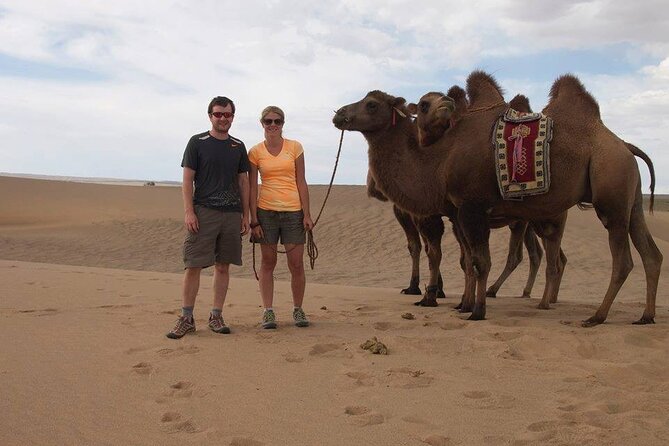
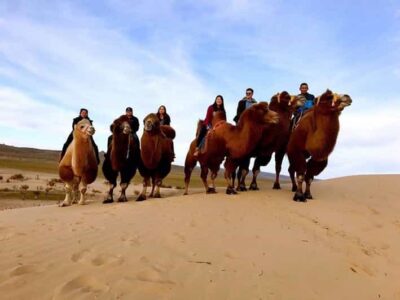
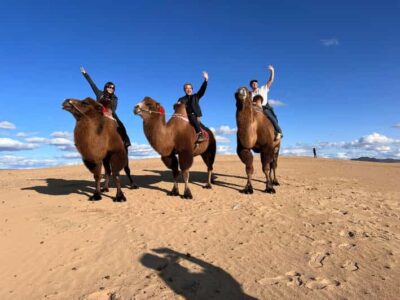
Khongoriin Els is the classic desert day. These are also called the singing dunes, and they are described as the largest sand dunes in Mongolia, reaching about 200 meters high and stretching roughly 12 kilometers wide.
The scale is what makes this stop special. A single dune can look impressive in a photograph, but a huge belt of sand gives you a better sense of the Gobi’s size. The dunes also provide one of the tour’s clearest opportunities for walking, climbing, and taking wide views.
The name comes from a sound sometimes associated with shifting sand. The information does not promise that you will hear the dunes sing during your visit, so treat that as a possibility rather than a guaranteed performance.
This is a place where the schedule and your energy matter. Sand walking is harder than it looks, especially on an incline. You will want water, sun protection, sturdy shoes, and a willingness to enjoy the view even if you do not climb very high.
The route description gives this stop a full day. That is useful, because rushing through the dunes would miss the point. The main limitation is simple: the desert can be tiring, and you may spend more time sitting in the vehicle than you expect while crossing the distances between major sights.
Day 5: Bayanzag, then the ruins of Ongi Monastery
The day begins with lunch in the Bayanzag area before the drive to Saikhan Ovoo, a small village in Middle Gobi Province. The scheduled highlight is Ongi Monastery, also called Ongiin Khiid.
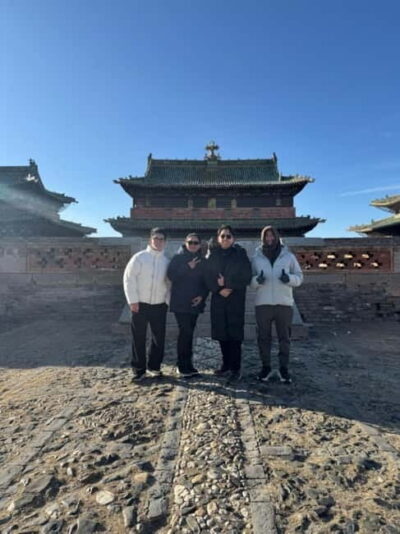
Ongi Monastery is described as an active small monastery among the ruins of the former complex. That combination gives the stop its character. You can see a place connected to Mongolia’s religious past while also encountering a living institution in the present.
Admission is included on this day. The wording does not give details about the length of the visit or which buildings remain, so your guide will be important in helping you understand what you are seeing.
This is also one of the days when the long-distance nature of the trip is most apparent. You are not simply visiting one nearby attraction. You are moving across a wide part of the country, with lunch and the monastery forming part of a longer journey.
The attraction may suit you especially well if you enjoy quiet historical places more than polished museums. If you need constant activity, the amount of driving may test your patience.
Day 6: Rock art and unusual sights at Baga Gazariin Chuluu
Baga Gazariin Chuluu brings you back to Mongolia’s rocky interior. The area includes Bolort Cave, an eye-treatment spa, rock images, petroglyphs, burial mounds, and other sights.
That is an unusually varied list for one stop. You can see natural features, traces of earlier human activity, and a local wellness tradition in the same general area. The details do not explain how each sight is visited, so ask your guide what can realistically fit into the day.
There are also ruins of Choir Monastery, founded by Zaya Damdin, described as a famous ancient historical figure. The combination of monastery remains, rock art, and burial mounds gives this day more cultural weight than a simple scenic drive.
Admission is included. You should expect another outdoor day with uneven ground and few familiar city comforts. This is the sort of stop where a good guide can make a real difference by explaining the petroglyphs and historic remains instead of simply pointing them out.
Day 7: Six hours back to Ulaanbaatar
The last day returns to Ulaanbaatar and takes about six hours. There is no major sightseeing stop listed, so you should think of this as a transfer day.
That long drive is worth considering before you book. After six days of remote roads and outdoor stops, you may be ready for a shower, a proper city meal, and a slower morning. The benefit is that the tour ends at the original meeting point, Danista Nomads, rather than leaving you to arrange your own return.
For planning purposes, do not schedule an important flight or tight connection immediately after the expected arrival. The data gives an approximate duration for the full experience, and road conditions can affect timing.
Guides, drivers, and the private-tour advantage
The strongest practical praise centers on the staff. Tomuro is named as an experienced driver who helped people feel safe on the road. That is not a minor detail in Mongolia, where the quality of the driver affects your comfort, confidence, and sense of security every day.
Singu Ratler is identified as a guide and photographer. Saruul is also praised for experience and care, while Nomin is described as a friendly, capable guide who tried to meet individual wishes.
You may not receive the same staff members on every departure, so ask who will lead your trip. Still, the pattern is encouraging: the operator appears to put real weight on local guiding and driving rather than treating the vehicle as an afterthought.
A private format also gives you more room to ask questions and adjust the pace within reason. It does not remove the long distances, but it can make them much easier to handle.
Food and accommodation: useful strengths, one clear warning
Food and accommodation are described positively overall. That matters because seven days in the Gobi require more than attractive scenery. You need regular meals and somewhere comfortable enough to recover after a day on the road.
The main warning is for vegetarians and vegans. The food may work better for people who eat meat, so contact Danista Nomads Tour before booking and explain your needs. The supplied details do not confirm a vegetarian or vegan menu.
The accommodation details are not fully specified. You should ask what type of lodging is planned each night, especially if you need a private room, particular facilities, or a certain comfort level. Do not assume that every night will match a city hotel.
Is $1,400 a fair price?
At $1,400 per person, this is a substantial purchase. The value comes from the seven-day length, private touring, long-distance transport, multiple major Gobi sights, local guiding, and the cultural element of meeting a nomad family.
You are paying for access to a remote region where arranging transport independently can be difficult. A good driver and guide also matter more here than they would on a short city excursion.
The price is harder to judge without a full list of inclusions. The supplied information identifies some admission costs as free and says admission is included at Ongi Monastery and Baga Gazariin Chuluu, but it does not spell out every meal, lodging cost, fuel charge, or transfer detail.
Before paying, ask for a written breakdown. Confirm exactly what is included in the $1,400, especially accommodation, meals, park fees, pickup, and any extra activities. Group discounts are offered, which may improve the value if you are booking with friends or family.
Who should book this seven-day adventure?
I would recommend this tour if you want a broad introduction to the Gobi without planning every road, overnight stop, and local connection yourself. It suits people who enjoy wide-open scenery, basic adventure, cultural encounters, and long drives.
It is also a good match if you prefer a private group. You can ask questions freely, talk with your guide, and share the experience only with the people you already know.
I would hesitate if you want a relaxed holiday with short transfers and hotel-style comforts. The route covers a great deal of ground, and the final six-hour return drive makes the schedule feel like an expedition rather than a gentle break.
The route can also feel touristy at the most famous sights. That is not necessarily a flaw. It means the places are accessible and well known, but you should not expect complete solitude at every stop.
Booking, weather, and practical planning
Confirmation is provided at booking, and most people can participate. The tour requires good weather, so poor conditions may lead to a different date or a full refund.
You can cancel for a full refund up to 24 hours before the start time. Cancellations or changes made less than 24 hours before departure are not accepted for a refund, and the cut-off uses local Mongolian time.
The tour starts at 8:30 am from Danista Nomads, with pickup offered. Since the trip includes remote outdoor locations, ask in advance about clothing, luggage limits, walking conditions, dietary needs, and the exact accommodation plan.
Should you book the Great Gobi Tour?
Book it if you want Mongolia in broad strokes: rock, sand, ice, monasteries, and nomad life in one carefully arranged loop. The strongest reasons to go are the varied route, private format, experienced driving, and the chance to begin one day with a nomad family.
Think twice if you dislike long road days, need guaranteed vegetarian food, or expect detailed comfort information before you commit. For an adventurous first visit to the Gobi, though, the seven-day plan offers strong coverage and a useful balance between major sights and local contact.
FAQ
How long is the Great Gobi Tour?
The tour lasts approximately seven days.
Where does the tour start?
It starts at Danista Nomads, Orkhon Street 1-37, BGD, 16 khoroo, Ulaanbaatar 16040, Mongolia.
What time does the tour begin?
The scheduled start time is 8:30 am.
Where does the tour finish?
The activity ends back at the original meeting point in Ulaanbaatar.
Is this a private tour?
Yes. Only your group participates in the activity.
Is pickup available?
Yes. Pickup is offered.
What happens if bad weather cancels the tour?
You will be offered a different date or a full refund if poor weather causes the experience to be canceled.
Newly listed around Ulaanbaatar
- Ulaanbaatar Signature Tour – Mongolia’s Capital in One Day★ 4.3 · 3 reviews
- VIP Pick Up Or Drop Off Airport Transfer In Ulaanbaatar City (UB)★ 5.0 · 2 reviews
- Ulaanbaatar: 4-Day Central Mongolia Winter Tour★ 5.0 · 3 reviews
- Ulaanbaatar: Chinggis Khaan Museum Highlights Private Tour★ 5.0 · 2 reviews
- Private Transfer between New Ulaanbaatar International Airport and Ulaanbaatar★ 5.0 · 4 reviews
- Private – Ulaanbaatar City Tour★ 3.5 · 3 reviews
- Transfer service to Terelj national park★ 5.0 · 3 reviews
- A Day Authentic Mongolian Trip near Ulaanbaatar all-inclusive★ 5.0 · 3 reviews
Gobi Desert Tours, compared.

Semi-Gobi and Kharkhorum overnight private trip
Read our review →
Travel to Gobi by train Visit World energy Center
Read our review →
Browse the lists this tour appears in