
Reviewed · GOBI DESERT TOURS
14 days Combination of Gobi and Central Mongolia
Mongolia rewards the curious. This 14-day small-group journey links the Gobi’s dunes, fossil sites, and desert valleys with Central Mongolia’s monasteries, hot springs, volcanoes, and nomadic life. I like the unusual range: one trip gives you camel riding at Khongoryn Els and a chance to see takhi wild horses at Hustai National Park. I also like that the route includes full rest days at the dunes and Orkhon Valley, rather than keeping you in the vehicle every day.
The main consideration is the amount of driving. Mongolia is huge, roads can be rough or unpaved, and several days last six to twelve hours. Camping and basic conditions are part of the appeal, but you should be comfortable with outdoor living and have at least moderate physical fitness.
In This Review
- Key things to know before booking
- Why this route works so well
- Days 1 and 2: Granite country and the White Stupa
- Days 3 and 4: Mountain valleys and the singing sands
- Day 5: A full day with Bactrian camels
- Day 6: Bayanzag and the Flaming Cliffs
- Day 7: The ruins of Ongi Monastery
- Days 8 and 9: Orkhon Waterfall and nomadic life
- Day 10: Tsenkher Hot Spring
- Days 11 and 12: Volcanic rock and Great White Lake
- Day 13: Kharkhorin and Erdene Zuu
- Day 14: Takhi horses and the return to Ulaanbaatar
- What the $2,025 price includes
- Who will enjoy this Mongolia trip
- Practical advice before you go
- Should you book it?
- FAQ
- How long is the Mongolia tour?
- How much does the tour cost?
- What is the maximum group size?
- Is pickup available?
- What meals are included?
- Is camping equipment provided?
- How long is the camel ride?
- What level of fitness is needed?
- Can I cancel for a full refund?
Key things to know before booking
- Camel riding at Khongoryn Els: You spend a full day without driving, with two to five hours available on a two-humped camel.
- Dinosaur country: Bayanzag, or the Flaming Cliffs, is tied to Roy Chapman Andrews and the first discovery of dinosaur eggs.
- Two contrasting national parks: Gobi Gurvansaikhan brings desert mountains and Yoliin Am Valley, while Khorgo Terkhiin Tsagaan offers volcanic craters, pine-covered lava fields, yaks, and a lake.
- Real outdoor accommodation: A sleeping bag, tent, and mattress are included, along with most meals.
- A maximum of 12 people: The group size is small enough to make rural stops more manageable.
- A long final day: Hustai National Park and the return to Ulaanbaatar take place on day 14.
Why this route works so well
This tour is built around contrast. The first week is dry, open, and geological. The second week brings rivers, waterfalls, forests, pasture, hot water, and old imperial sites. You get the Gobi without treating it as the whole story of Mongolia.
That matters because the Gobi is not just a sea of sand. Baga Gazariin Chuluu brings granite formations rising from open plain. Tsagaan Suvarga shows cliffs carved by erosion. Bayanzag adds fossil history, while Gobi Gurvansaikhan introduces mountain country and Yoliin Am.
Central Mongolia then changes the pace. Orkhon Valley offers time with local families and a look at dairy-making and daily life. Tsenkher Hot Spring gives you a long soak after several days on the road. Kharkhorin connects the scenery to the Mongol Empire, and Hustai finishes the trip with Mongolia’s famous takhi horses.
The route is ambitious, but it is not a rushed checklist. Two no-driving days are especially valuable. At Khongoryn Els, you can spend more time with the camels and dunes. At Orkhon Waterfall, you can ride a horse, fish, hike, or simply pay attention to how a family lives.
More Gobi Desert trips:
- Ulaanbaatar: Semi-Gobi Desert Day Trip & Camel Ride
★ 4.0 · 92 reviews - From Ulaanbaatar: Semi Gobi, Nomads, Ancient Kharkhorin Tour
★ 4.6 · 84 reviews - 1 Day Semi-Gobi All-included tour
★ 4.0 · 69 reviews
Days 1 and 2: Granite country and the White Stupa
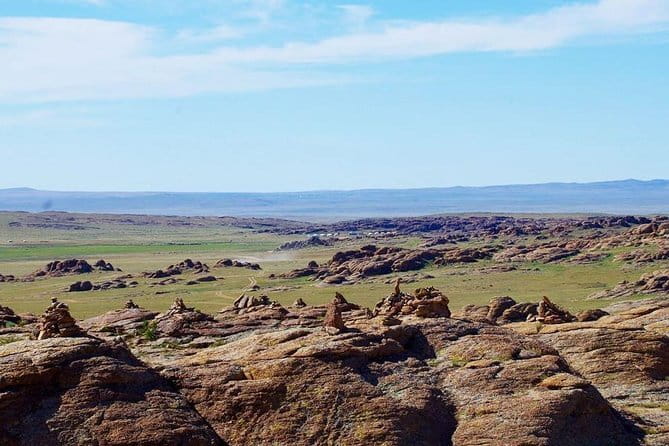
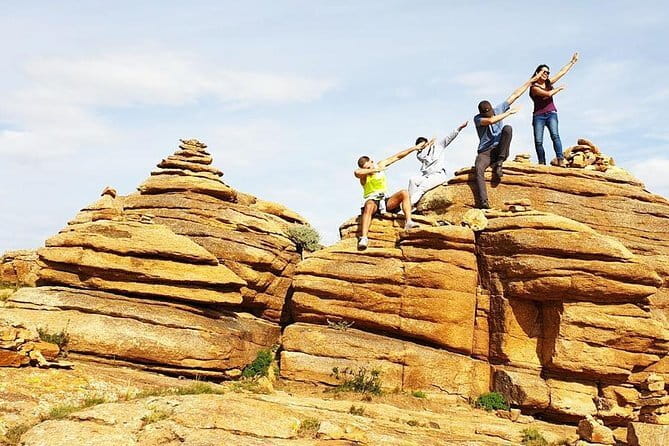
Your first morning begins with a long drive to Baga Gazariin Chuluu in Dundgovi Province. The site is known for large granite formations, with the highest point reaching about 1,768 meters. The rocks rise from a broad plain, giving you an early taste of Mongolia’s enormous scale.
The stop is listed as a 12-hour day, so expect the road to be the main event as well as the destination. This is not a quick photo stop beside the vehicle. You need patience on day one, particularly if you have just arrived in Ulaanbaatar.
On day two, you continue to Tsagaan Suvarga, or the White Stupa. Natural erosion shaped the striking cliff formations, which sit near the meeting point of the Middle Gobi and South Gobi regions. The three-hour visit is shorter than the first day, giving you more time to study the cliffs and their changing colors.
I like the opening sequence because it avoids starting with the most famous attraction. Baga Gazariin Chuluu and Tsagaan Suvarga show you two different forms of desert scenery before the trip reaches the major sand dunes.
Days 3 and 4: Mountain valleys and the singing sands
Day three takes you toward Gobi Gurvansaikhan National Park, passing through Dalanzadgad, the capital of Umnugovi Province. The park includes the eastern end of the Altai mountain complex and brings more height and rock to the route.
Yoliin Am Valley is one of the trip’s appealing natural stops. Its unusual rock formations support bird and plant life that can feel surprising in a desert setting. The listed visit lasts about two hours, so this is an introduction rather than a full-day wilderness outing.
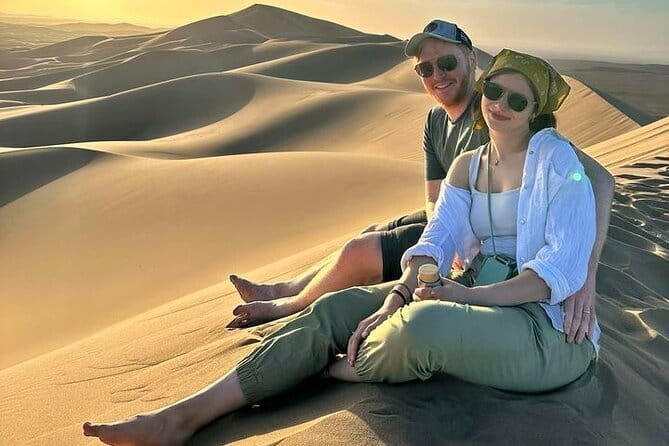
On day four, the route reaches Khongoryn Els, the great sand dune area. The dunes extend for about 180 kilometers, reach roughly 400 meters in height, and are about 20 kilometers wide. Mountains surround them, and strips of green vegetation border the sand.
The scale is the point. You are not looking at one isolated dune. You are seeing a broad, shifting belt of sand backed by mountains. If conditions allow, climbing toward the top around sunset offers wide views across the desert. The climb can be tiring, so keep your pace steady and save energy for the descent.
Day 5: A full day with Bactrian camels
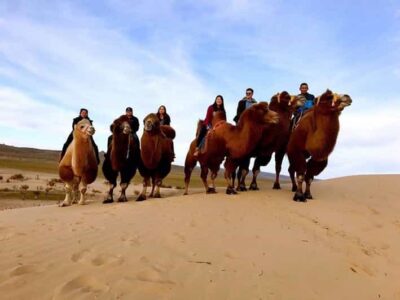
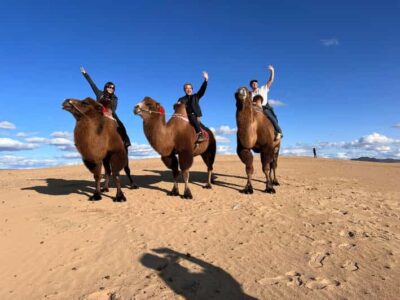
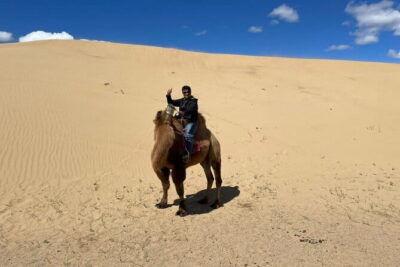
Day five is one of the tour’s best-designed days because there is no driving. After breakfast, you ride a two-humped camel for roughly two to five hours, depending on the plan you choose. Lunch is taken along the way, and a longer ride can take you across the dunes.
This is a proper break from the vehicle, not just a short animal ride for a photograph. You have time to notice the camel’s slow, rolling motion and the changing relation between sand, mountains, and green ground.
Still, camel riding is not effortless. A two to five hour ride can be physically demanding, and the itinerary calls for moderate fitness. If you prefer a shorter outing, the description allows for that. Clarify the exact camel schedule with Top Tours Mongolia before departure, especially if you have back, hip, or knee concerns.
Camping near the Gobi can also bring memorable surprises. The supplied experience account describes waking near camels, sheep, and curious foxes sniffing around a tent. That kind of closeness to rural life is part of the charm, though it also means you should expect basic outdoor conditions rather than hotel comforts.
More central Mongolia routes:
- From Ulaanbaatar: Central Mongolia Guided 3-Day Tour
★ 4.6 · 186 reviews - Ulaanbaatar: Small Group 3-Day Best of Central Mongolia Tour
★ 4.1 · 171 reviews - Central Mongolia Guided 3-Day Comfortable Tour
★ 4.5 · 37 reviews - 4 Day Best of Central Mongolia tour, Chinggis Khan statue
★ 4.8 · 21 reviews
Day 6: Bayanzag and the Flaming Cliffs
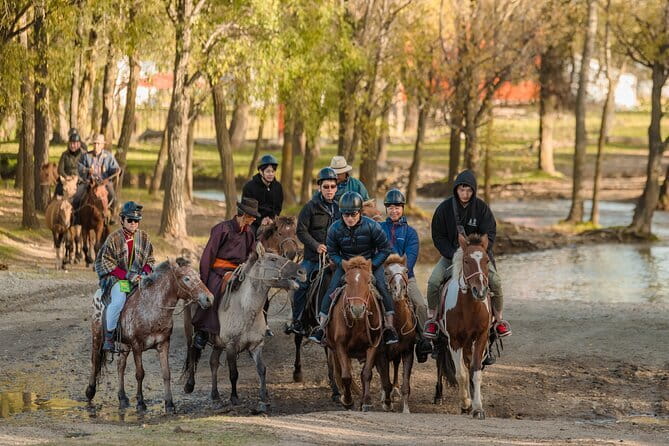
The drive to Bayanzag, also called the Flaming Cliffs, shifts the focus from sand to fossils. The red formations developed 60 to 70 million years ago, and the area became famous after Roy Chapman Andrews found the first known nest of dinosaur eggs there.
You should visit with realistic expectations. This is a fossil site and a dramatic area of eroded rock, not a museum filled with complete skeletons. The three-hour stop gives you time to walk among the cliffs and understand why the color and geology made the area famous.
Bayanzag also carries a reminder of how much Mongolia has contributed to paleontology. The story is not only about dinosaurs. It is about field science, remote expeditions, and discoveries made in a place that still feels far from ordinary roads.
Day 7: The ruins of Ongi Monastery
Day seven brings another long drive, this time to Ongi Monastery. Ongi Khiid was founded in 1660 and once included two large temple complexes on opposite sides of the Ongi River.
The remains are a sober stop. You see what is left of a major religious center rather than a fully restored monastery. That makes the visit more reflective and helps you understand the scale of religious life that once existed across Mongolia.
At three hours, the stop offers enough time to explore without turning the entire day into a museum visit. The drive is again a major part of the schedule, so use the day to adjust to Mongolia’s distances. In this country, a stop listed as three hours may sit at the end of a very long road.
Days 8 and 9: Orkhon Waterfall and nomadic life
The route then leaves the Gobi for Orkhon Valley. You visit Orkhon Waterfall, known locally as Red Waterfall, and see the Orkhon River, described as Mongolia’s longest river. Volcanic eruptions helped form the waterfall, giving the site a different character from the eroded cliffs and dunes farther south.
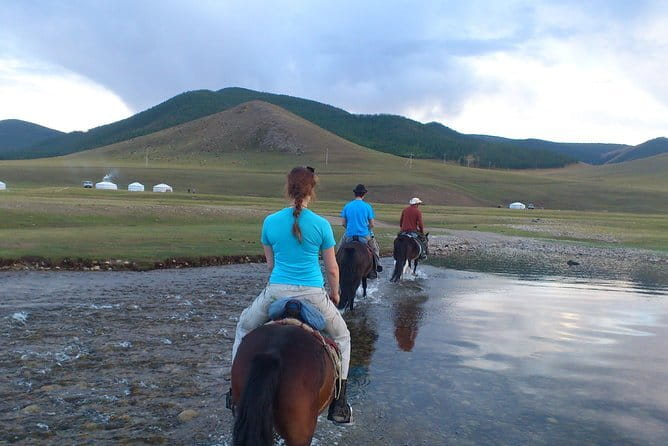
Day eight includes about three hours at the waterfall. Day nine has no driving, which is excellent timing. You can explore the valley, hike, ride a horse, fish, and learn about local daily life. There is also an opportunity to see how dairy products are made.
This is one of the tour’s most valuable cultural sections. You are not simply passing through pastureland and taking pictures of a ger. You have time to observe work, animals, food, and routines in a setting where seasonal movement still shapes daily life.
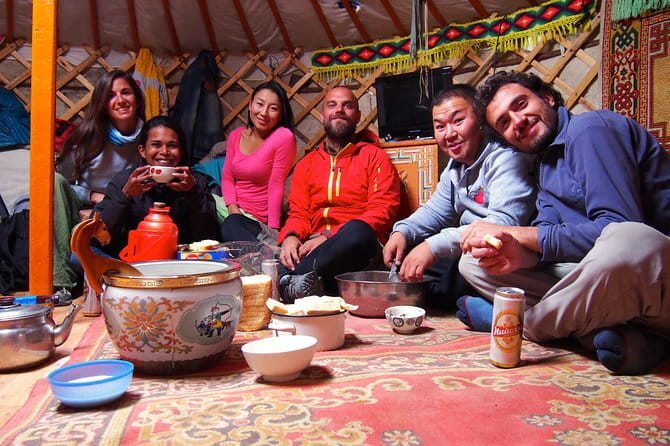
You should also understand that local stays and camping can be simple. The appeal is direct contact with rural Mongolia, not polished service. If you are not normally a camping person, the included sleeping bag, tent, and mattress make the logistics easier, but they do not turn the trip into a hotel holiday.
Day 10: Tsenkher Hot Spring
After breakfast, you drive to Tsenkher Hot Spring. The journey is listed as a 12-hour day, so the hot spring may feel especially welcome when you arrive.
The spring is one of Mongolia’s largest, with water described at about 86 degrees and notable alkalinity and fluoride levels. You should not assume that the water itself is 86 degrees in every bathing area. Ask locally about safe pools and bathing temperatures.
The spring has a place in Mongolian traditional medicine, which gives the stop more meaning than a simple spa break. Even so, the practical value is clear: after long drives, camping, hiking, and camel riding, warm water can reset your body.
Day 10 is not a relaxed resort day from start to finish. It combines a very long drive with the chance to bathe. Pack swimwear where you can reach it easily rather than burying it in your main luggage.
Days 11 and 12: Volcanic rock and Great White Lake
Day 11 takes you toward Khorgo Terkhiin Tsagaan Nuur National Park. The route includes Chuluut Gorge, extinct volcanic craters, pine-covered lava fields, and grazing yaks. The scenery should feel markedly different from the Gobi, with darker volcanic rock and more open water.
Terkhiin Tsagaan Lake is known as Great White Lake in English. The lake and surrounding volcanic country create one of the route’s strongest natural contrasts. The day includes about six hours of driving, so the journey remains substantial, but the destination gives you a new setting to explore.
On day 12, you hike toward Khorgo volcano. The volcano erupted about 8,000 years ago, leaving craters and lava formations that now sit beside the lake and pine-covered ground.
The four-hour hiking period is manageable for many people with moderate fitness, but you still need sturdy footwear and sensible pacing. The provided information does not specify trail difficulty, so ask the operator about the exact route if you have mobility concerns.
Day 13: Kharkhorin and Erdene Zuu
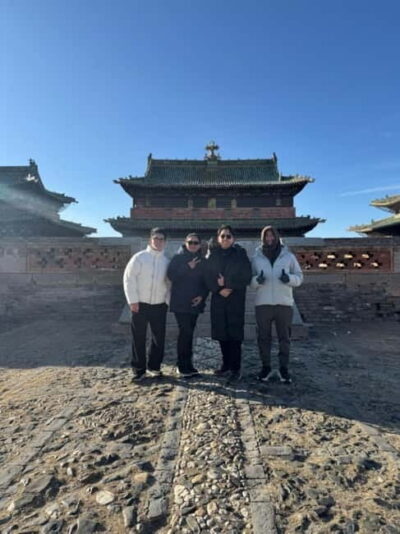
Day 13 brings a 12-hour drive to Kharkhorin, the site of the 13th-century capital of the Mongol Empire. The long road is balanced by a major historical stop: Erdene Zuu Monastery and a local museum.
Erdene Zuu gives you a direct connection to Mongolia’s Buddhist tradition and later history. The museum adds context, including material connected with the Mongol Empire. Together, the monastery and museum help turn a distant name from a history book into a place you can walk through.
Because the day is long, do not expect an extended city visit. Kharkhorin works best here as a focused historical stop within a larger route, not as a separate urban break.
Day 14: Takhi horses and the return to Ulaanbaatar
The final day visits Hustai National Park, established in 2003 and known for the reintroduction of takhi, Mongolia’s wild horse. The reintroduction project began in 1992, and the information center provides background before you head into the park.
This is a strong final stop because it adds wildlife to a trip otherwise dominated by geology, culture, and open country. Seeing horses in a national park also gives the final day a sense of place, rather than making the return to Ulaanbaatar a simple transfer.
The drive back includes lunch and possible time at a Gobi Factory cashmere shop before hotel check-in. You should treat the shop as an optional shopping stop, not a central attraction. The tour ends in Ulaanbaatar after this return journey.
What the $2,025 price includes
At $2,025 per person, the tour costs about $145 per day before considering the substantial transport, accommodation, guides, park visits, and meals included. The value looks strongest if you want one organized route through remote regions and do not want to arrange vehicles, camping equipment, meals, and rural stops yourself.
Included are:
- Sleeping bag
- Tent
- Mattress
- Breakfast on 13 days
- Lunch on 13 days
- Dinner on 12 days
- All fees and taxes
The food coverage is generous for a 14-day trip. One dinner is not included, and the package does not include travel insurance. You should arrange insurance separately, especially because the tour operates far from major cities and requires good weather.
A group limit of 12 helps the price make sense. You are sharing transport and logistics, but the group is not enormous. Pickup is offered, and the experience uses a mobile ticket, which makes arrival simpler.
Who will enjoy this Mongolia trip
I would recommend this route if you want:
- A broad first look at Mongolia
- Desert scenery and Central Mongolian nature in one trip
- Camel riding and a possible horse ride
- Camping with tents and sleeping equipment supplied
- Time with local people and rural families
- Archaeology, monasteries, fossils, and wildlife
- A small group capped at 12 people
I would be cautious if you dislike long drives, basic camping, uncertain weather, or changing conditions. Several days run for 12 hours, and two to five hours on a camel may be harder than expected.
The tour also suits people who prefer a full schedule. You will not spend every afternoon relaxing at a hotel. You will cover a great deal of ground, with a few well-placed no-driving days to keep the pace from becoming relentless.
Practical advice before you go
Book with a little planning room. This experience is booked, on average, 51 days ahead, and the listed operating dates cover January through December 2026. Mongolia’s conditions can vary, and the tour requires good weather. If poor weather cancels the trip, you are offered another date or a full refund.
Wear clothing that works for changing conditions, and keep useful items accessible during long drives. You will want water, sun protection, comfortable walking shoes, and warm layers close at hand. The supplied sleeping bag, tent, and mattress reduce what you need to carry, but you still need to prepare for outdoor nights.
A moderate fitness level is required. That applies not only to hikes and camel riding, but also to repeated days of getting in and out of vehicles, walking at natural sites, and sleeping outdoors.
Should you book it?
Book this tour if you want Mongolia in its broadest, most practical form: Gobi dunes, dinosaur country, volcanic parks, nomadic life, imperial history, and wild horses in a single 14-day route. The full day at Khongoryn Els and the no-driving day in Orkhon Valley are especially helpful touches.
Skip it if your idea of a holiday requires short transfers, soft beds every night, or carefully controlled weather. At $2,025, the value is good for the amount of ground, food, equipment, and access included, but the price buys an expedition-style trip, not a luxury circuit.
FAQ
How long is the Mongolia tour?
The tour lasts approximately 14 days, beginning in Ulaanbaatar and ending with a return to Ulaanbaatar on day 14.
How much does the tour cost?
The listed price is $2,025 per person.
What is the maximum group size?
The tour accepts a maximum of 12 travelers.
Is pickup available?
Yes, pickup is offered.
What meals are included?
Breakfast and lunch are included on 13 days. Dinner is included on 12 days.
Is camping equipment provided?
Yes. The tour includes a sleeping bag, tent, and mattress.
How long is the camel ride?
On day five, camel riding takes about two to five hours. A longer ride may cross the sand dunes.
What level of fitness is needed?
Participants should have a moderate level of physical fitness. The trip includes hiking, camel riding, outdoor camping, and long driving days.
Can I cancel for a full refund?
Yes, if you cancel at least 24 hours before the experience start time. Cancellations within 24 hours are not refunded, and poor weather may result in a different date or a full refund.
Newly listed around Ulaanbaatar
- Ulaanbaatar Signature Tour – Mongolia’s Capital in One Day★ 4.3 · 3 reviews
- VIP Pick Up Or Drop Off Airport Transfer In Ulaanbaatar City (UB)★ 5.0 · 2 reviews
- Ulaanbaatar: 4-Day Central Mongolia Winter Tour★ 5.0 · 3 reviews
- Ulaanbaatar: Chinggis Khaan Museum Highlights Private Tour★ 5.0 · 2 reviews
- Private Transfer between New Ulaanbaatar International Airport and Ulaanbaatar★ 5.0 · 4 reviews
- Private – Ulaanbaatar City Tour★ 3.5 · 3 reviews
- A Day Authentic Mongolian Trip near Ulaanbaatar all-inclusive★ 5.0 · 3 reviews
- Transfer service to Terelj national park★ 5.0 · 3 reviews
Gobi Desert Tours, compared.

Semi-Gobi and Kharkhorum overnight private trip
Read our review →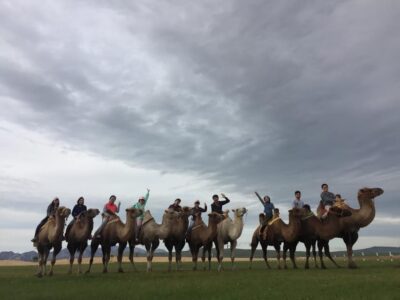
Travel to Gobi by train Visit World energy Center
Read our review →
Browse the lists this tour appears in