
Reviewed · NATIONAL PARKS
11 Day World Heritage Orkhon Valley National Park Cycling Tour
Mongolia rewards riders who like wide horizons. This 11-day journey links Ulaanbaatar with the Orkhon Valley, the ancient capital of Kharkhorum, mountain passes, hot springs, waterfalls, and working nomadic communities. You travel slowly enough to notice felt gers beside the river, grazing animals on open pasture, and the changing shape of the Khangai Mountains.
I especially like the strong cultural mix: the trip opens with museums, Buddhist art, music, and throat singing, then moves into daily life among nomadic families. I also like the support system, with guides, cooks, drivers, a mechanic, kitchen tents, shower tents, and toilet tents helping make remote cycling practical.
The main caution is physical. You will ride as far as 71 kilometers in a day and climb several mountain passes. The tour suits people with moderate fitness, but beginners should prepare for long hours on dirt roads, changing weather, and simple camping.
In This Review
- Key points to know before booking
- Why this route works for a Mongolia cycling holiday
- Day 1: Ulaanbaatar museums, Buddhist art, and music
- Day 2: Ogii Lake and the small Gobi at Elsen Tasarkhai
- Day 3: Sixty-one kilometers beside the Tamir River
- Day 4: Nomadic summer camps along the Tamir
- Day 5: Forty kilometers to Tsenkher Hot Spring
- Day 6: Three mountain passes and a long downhill
- Day 7: The Orkhon Valley and its waterfall
- Day 8: The longest ride, at 71 kilometers
- Day 9: Kharkhorin and the remains of Kharkhorum
- Day 10 and Day 11: Returning to Ulaanbaatar and flying home
- What the $2,935 price really covers
- Who should book this cycling tour
- Should you book the Orkhon Valley ride?
- FAQ
- How long is the Orkhon Valley cycling tour?
- Where does the tour start?
- How far do you cycle each day?
- Is the tour suitable for beginner cyclists?
- What kind of bicycle is provided?
- Are support vehicles included?
- What accommodation is provided?
- Are sleeping bags and mattresses included?
- Is the Orkhon Waterfall visit included?
Key points to know before booking
- The ride covers Mongolia’s Orkhon Valley World Heritage area, including the Orkhon Waterfall and the old Mongol capital near Kharkhorin.
- Cycling distances range from 24 to 71 kilometers, with the hardest climbing in the northern Khangai Mountains.
- A support team follows the group, including English-speaking cycling guides, mountain bike guides, cooks, drivers, and bike support.
- Accommodation mixes city hotels, tented camps, and tourist ger camps, so this is not a soft hotel holiday.
- Cultural visits are built into the route, from the National Museum and Choijin Lama Temple to nomadic homes and Erdene Zuu Monastery.
- The $2,935 price includes most major trip costs, but flights, insurance, sleeping gear, personal cycling equipment, and some optional activities cost extra.
Why this route works for a Mongolia cycling holiday
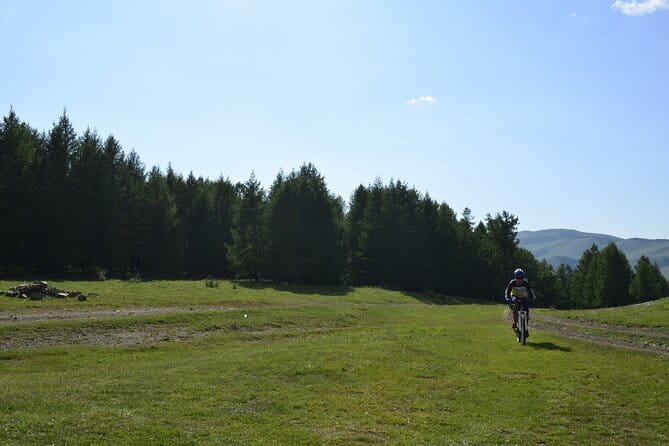
The smart feature here is the gradual change in pace and setting. You begin with two nights in Ulaanbaatar, where you can learn the broad story of Mongolia before heading into the open country. After that, the journey shifts from vehicle travel to a steady cycling route through rivers, pasture, foothills, and mountain valleys.
You are not simply pedaling from one point to another. The route follows rivers that have long supported summer camps, livestock, and movement across central Mongolia. That gives the cycling a purpose. You can see why nomadic families choose particular valleys and why water matters so much in a country with an extreme climate.
The group size is limited to 12 people. That is useful on narrow dirt roads and during visits to local families. It also lets the support team keep a closer eye on riders during the tougher sections.
A particularly strong sign of the company’s organization is the staffing model used for a five-person group. That group had one guide and bike mechanic riding with them, plus a cook and two drivers handling the support vehicles. Staffing can vary, but this gives you a good idea of how much practical help is built into the trip.
More national park trips from Ulaanbaatar:
- Genghis Khan Statue Day Tour+National Park+Camel Ride+Eagle
★ 4.5 · 261 reviews - Terelj national park transport /Best price tour
★ 4.7 · 135 reviews - A day trip to Terelj National Park and Statue of Chinggis Khan
★ 5.0 · 74 reviews
Day 1: Ulaanbaatar museums, Buddhist art, and music
Your first day begins with airport pickup at Chinggis Khaan International Airport and transfer to a four-star hotel in central Ulaanbaatar. The start time is listed as 8:00 a.m., so make sure your arrival plans fit that schedule.
The city tour begins at the main square, where a large statue of Chinggis Khan faces the parliament building. It is an efficient introduction to modern Mongolia’s public identity, but the National Museum gives you more context. In about an hour, you move from early human history through the eras of nomadic empires and into the modern period.
The Choijin Lama Temple Museum adds a different layer. Its Buddhist artwork and religious masks show Mongolia’s Tibetan Buddhist tradition, which is easy to overlook if you focus only on the country’s famous horsemen and emperors.
The evening Tumen Ekh Ensemble performance brings traditional music, throat singing, and contortion into the program. A welcome dinner and trip briefing follow. This is a full first day, but the sequence is well chosen: national history, religion, performance, food, and practical preparation.
Day 2: Ogii Lake and the small Gobi at Elsen Tasarkhai
After breakfast, you leave the capital by vehicle for Ogii Lake. The drive takes up most of the day, but it brings you to a freshwater lake surrounded by rolling steppe. Migratory birds use the area in summer, and the lake also supports several fish species.
You camp near the water. Optional activities include hiking, horse riding, boating, and fishing. These are not included, so budget separately if one appeals to you. The lake gives you a slower first night outside the city before the main cycling begins.
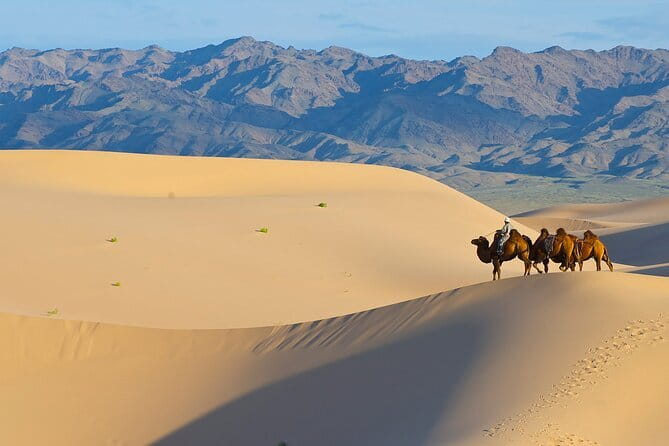
The stop at Elsen Tasarkhai adds a surprising change of scenery. This stretch of Mongol Els is known as the little Gobi, with sand dunes extending about 80 kilometers in length and about 5 kilometers in width. It is a good reminder that central Mongolia is not one endless grassland. Open pasture, sand, water, and mountain country all appear within the same trip.
Day 3: Sixty-one kilometers beside the Tamir River
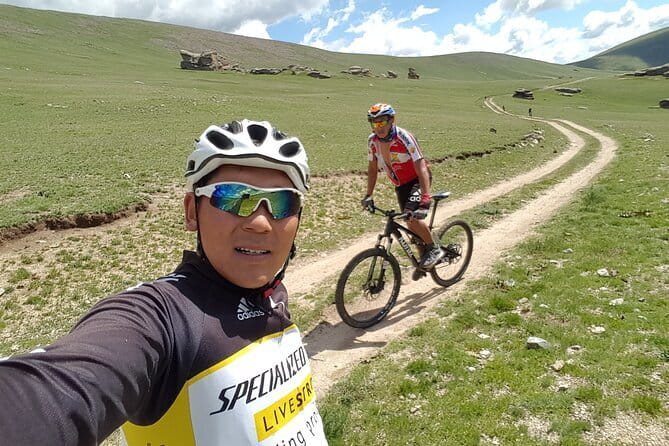
This is your first proper riding day. The mountain biking guide adjusts the selected bicycles and explains how the trip will work. You then cycle 61 kilometers on a smooth, hard-packed dirt road through grassland beside the Tamir River.
That surface matters. Hard-packed dirt is generally easier than loose sand or rough rock, but it still demands attention, especially if the weather changes. The route is long enough to feel like a real cycling day without immediately putting you into the steepest mountain sections.
The support vehicle remains nearby. A separate kitchen vehicle moves ahead to prepare snacks and lunch, then sets up the camp kitchen, shower, and toilet tents. This arrangement reduces the amount you need to carry and makes remote camping far more manageable.
The supplied Giant ATX 600 series hardtail has a Shimano 3×7 setup. You should still bring personal cycling clothes and gear suited to long days outside. Sleeping bags and mattresses are not included, so those need to be arranged separately.
A few more Ulaanbaatar departures worth comparing
- From Ulaanbaatar: Genghis Khan Statue NationalPark CamelRide
★ 4.8 · 353 reviews - From Ulaanbaatar: Central Mongolia Guided 3-Day Tour
★ 4.6 · 186 reviews - Ulaanbaatar: Small Group 3-Day Best of Central Mongolia Tour
★ 4.1 · 171 reviews - Ulaanbaatar: Chinggis Khaan Statue and Turtle Rock Day Tour
★ 4.7 · 132 reviews
Day 4: Nomadic summer camps along the Tamir

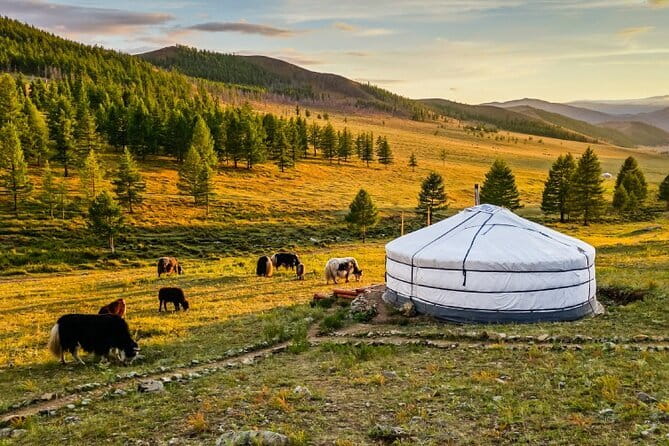
The route continues beside the Tamir River, where summer pasture and water draw nomadic families. You may see felt homes, known as gers, placed near the river while livestock graze nearby. The trip explanation points out that daily life has changed little in many ways, even though modern tools now assist with chores.
The first part of the day follows the river. After about 35 kilometers, the road becomes hillier for roughly 12 kilometers. It then enters mountain country before a gentle downhill to camp near the river.
This is a good example of why you need moderate fitness rather than only casual cycling experience. The total distance is not specified, but the route includes a sustained hilly section followed by mountain riding. The downhill helps, yet you should expect a day of changing effort rather than one steady cruise.
Day 5: Forty kilometers to Tsenkher Hot Spring
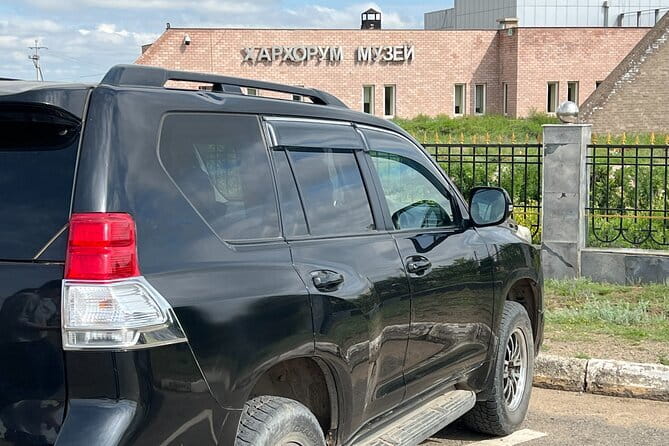
You continue through rolling steppe for about 40 kilometers, with gers and large flocks of grazing animals appearing along the route. The scenery gradually changes as you approach the northern Khangai Mountains, a range stretching roughly 700 kilometers northwest to southeast through central Mongolia.
The reward is Tsenkher Hot Spring. You stay at a tourist ger camp and can relax in a pool filled with spring water. A body massage is available for an additional fee.
This stop is well placed. It gives your legs a break before the most demanding mountain day. The ger camp is also a step up from tent camping, though you should not expect the same facilities as a city hotel. The hot spring is included, while the massage is optional.
Day 6: Three mountain passes and a long downhill
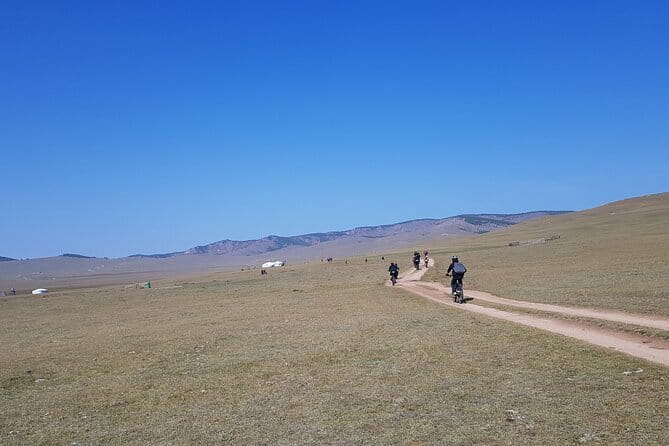
This is likely the toughest cycling day. The route passes two small summits early on, at 1,872 and 1,848 meters above sea level. You then continue gradually upward toward a third pass at 2,030 meters, reached around the 40-kilometer point.
After the final climb, a pleasant 15-kilometer downhill leads to camp in a valley surrounded by hills. The structure of the day is clear: steady effort, repeated climbs, then a satisfying descent.
You should take the altitude and distance seriously even though the pass elevations are not extreme by global mountain standards. The road surface, weather, fatigue, and repeated climbs can matter more than the numbers. This is the day when a reasonable training base will help most.
Day 7: The Orkhon Valley and its waterfall
The morning begins with two more passes. From the top of the second, you get a broad view over the Orkhon River Valley, a UNESCO World Heritage cultural area tied to the rise of major nomadic cultures and empires.
From there, the route turns easier, with about 33 kilometers of downhill riding through the valley. The road follows the Orkhon and gives you time to look beyond your front wheel. This is one of the most rewarding parts of the trip because the scenery and history are present at the same time.
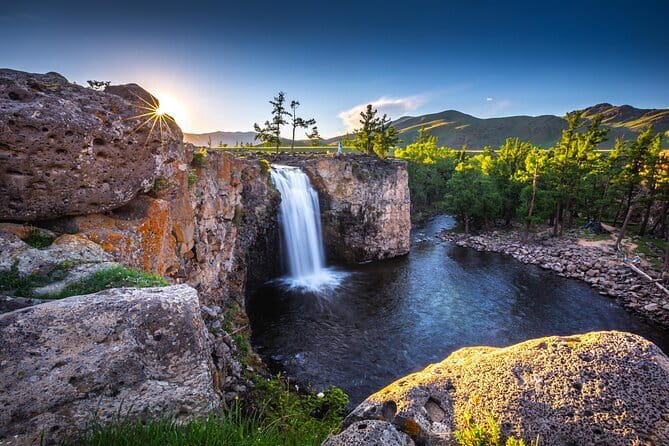
After camp is set near a riverbank, you can walk or take a short drive to Orkhon Waterfall. The waterfall drops about 20 meters and is roughly 10 meters wide. About 25 meters downstream, a path leads down into a gorge around 22 meters deep, with pine trees along the bottom.
The waterfall visit is included, but the route down into the gorge may not suit everyone. Take care on uneven ground, particularly after a long riding day.
Day 8: The longest ride, at 71 kilometers
At 71 kilometers, this is the longest cycling day. The route follows the Orkhon River on a generally enjoyable descent, although the distance alone makes it a demanding day.
The river corridor supports a high concentration of nomadic families. That creates some of the best opportunities on the trip to meet local people, visit their homes, taste dairy foods, and learn how they live and work.
These encounters are one reason the slower cycling format has value. A fast vehicle tour can cross the valley, photograph a view, and move on. Riding gives you more time to notice small details and arrive at a more natural pace.
Still, cultural contact should be approached with respect. You are entering working homes and communities, not visiting a staged attraction. Follow the guide’s direction, accept hospitality politely, and remember that dairy foods may be unfamiliar to you.
Day 9: Kharkhorin and the remains of Kharkhorum
The riding distance falls to 24 kilometers, but the first 10 kilometers climb. After that, the route becomes easier as you continue through the Orkhon Valley toward Kharkhorin.
Kharkhorin is the modern town named after Kharkhorum, the old capital of the Mongol Empire. Little remains of the original city because it was destroyed, and some of its materials were later used to build Erdene Zuu Monastery in the 16th century.
Erdene Zuu is now the main attraction. The monastery suffered near-total destruction during the Communist Purges of the 1930s, but several temples and the enclosing walls with stupas survived. The site gives you a useful counterpoint to the open-country riding: here, Mongolian religious and imperial history is gathered into one place.
The short riding day is welcome after the 71-kilometer run. It also leaves room for the historical visit, though the supplied schedule does not state the exact length of time spent at Erdene Zuu.
Day 10 and Day 11: Returning to Ulaanbaatar and flying home
On Day 10, the bicycles are loaded onto the support vehicles for the drive back to Ulaanbaatar. Lunch is provided on the way. Once at the hotel, you have time to rest before the farewell dinner.
This vehicle return is practical. It prevents you from retracing the same roads and keeps the trip focused on new ground during the cycling portion. You spend the final night in the city rather than rushing straight to the airport.
On Day 11, the guide and driver take you to Chinggis Khaan International Airport. Airport transfers are included, which is helpful after a remote trip with bicycles and camping equipment.
What the $2,935 price really covers
At $2,935 per person, this is a substantial purchase, but the price includes a great deal of infrastructure. You receive two nights in a four-star Ulaanbaatar hotel with twin accommodation and breakfast, six twin tented nights, and two nights at a tourist ger camp in twin or triple rooms.
The package also includes:
- Breakfast on 10 days
- Dinner on 10 days
- Lunch on 9 days
- Drinking water
- Snacks and extra drinks during cycling
- Park fees and listed visits
- International airport transfers
- English-speaking cycling guides
- Mountain biking guides
- Cooks
- Russian 4WD support vehicles with bike racks
- A Giant ATX 600 series hardtail bicycle
The value is strongest if you want a supported expedition rather than a self-planned ride. Food, transport, cooking, camp setup, route support, and bike logistics are all handled by the team.
The extra costs are important. International flights, visa fees, travel insurance, sleeping bags, mattresses, personal bike clothing, personal gear, optional activities, and meals not listed are excluded. Add those before deciding that the advertised price is your full budget.
Who should book this cycling tour
I would recommend it to riders who want Mongolia beyond the capital and who are comfortable with simple accommodation. It is also a good fit if you want cultural contact without giving up the structure of a guided trip.
Beginners can consider it because the company says the tour is suited to both beginner and advanced cyclists, and the support vehicle stays nearby. But beginner does not mean effortless. The 61-kilometer and 71-kilometer days, plus the Khangai passes, require preparation.
You should be ready for:
- Long hours on dirt roads
- Several mountain climbs
- Tent camping and ger camping
- Limited personal space in remote areas
- Weather changes across open country
- Carrying or arranging your own sleeping gear
- A small-group trip with a maximum of 12 people
The strongest praise attached to this experience focuses on care from arrival through departure, along with the balance of cultural visits and cycling. That matches the practical design of the trip: the support team handles the hard logistics while you focus on riding, scenery, and conversation.
The cancellation terms are also worth noting before you pay. A full refund is available if you cancel at least six full days before the start time. A cancellation two to six days before departure receives a 50 percent refund, while cancellations less than two days ahead are nonrefundable. The company can also cancel if the minimum group size is not met, in which case you are offered another date or experience, or a full refund.
Should you book the Orkhon Valley ride?
Book this tour if you want a serious but supported cycling journey through Mongolia’s central river valleys, and if Erdene Zuu, nomadic life, mountain roads, and remote camps appeal more than polished hotels.
Think twice if you dislike long rides, shared or basic accommodation, or preparing your own sleeping equipment. The best preparation is simple: build endurance for at least 60-kilometer days, bring suitable personal gear, and accept that the most memorable parts of Mongolia often come with dust, effort, and a little discomfort.
For the right rider, the $2,935 cost buys more than transport between sights. It buys time in the countryside, a capable support system, and a route that connects Mongolia’s old empires with the people and rivers that still shape life there.
FAQ
How long is the Orkhon Valley cycling tour?
The experience lasts approximately 11 days, beginning with airport pickup in Ulaanbaatar and ending with transfer to Chinggis Khaan International Airport.
Where does the tour start?
The tour starts at Chinggis Khaan International Airport near Ulaanbaatar. The listed start time is 8:00 a.m.
How far do you cycle each day?
The stated cycling distances include 61 kilometers on Day 3, about 40 kilometers on Day 5, 33 kilometers of downhill riding on Day 7, 71 kilometers on Day 8, and 24 kilometers on Day 9. Some other daily distances are not specified.
Is the tour suitable for beginner cyclists?
The experience is described as suitable for beginner and advanced cyclists, but you should have moderate physical fitness. The route includes long dirt-road rides, hills, mountain passes, and a 71-kilometer cycling day.
What kind of bicycle is provided?
The included bicycle is a Giant ATX 600 series hardtail mountain bike with a Shimano 3×7 setup.
Are support vehicles included?
Yes. Russian 4WD vehicles with bike racks support the cycling sections. English-speaking cycling guides, mountain biking guides, cooks, and drivers are also included.
What accommodation is provided?
The package includes two nights at a four-star hotel in Ulaanbaatar, six nights in twin tented accommodation, and two nights at a tourist ger camp in twin or triple accommodation.
Are sleeping bags and mattresses included?
No. Sleeping bags and mattresses are not included, so you must arrange those separately.
Is the Orkhon Waterfall visit included?
Yes. The visit to Orkhon Waterfall and the listed national park visits and fees are included. The waterfall is about 20 meters high and roughly 10 meters wide.
Newly listed around Ulaanbaatar
- Ulaanbaatar Signature Tour – Mongolia’s Capital in One Day★ 4.3 · 3 reviews
- VIP Pick Up Or Drop Off Airport Transfer In Ulaanbaatar City (UB)★ 5.0 · 2 reviews
- Ulaanbaatar: 4-Day Central Mongolia Winter Tour★ 5.0 · 3 reviews
- Ulaanbaatar: Chinggis Khaan Museum Highlights Private Tour★ 5.0 · 2 reviews
- Private Transfer between New Ulaanbaatar International Airport and Ulaanbaatar★ 5.0 · 4 reviews
- Private – Ulaanbaatar City Tour★ 3.5 · 3 reviews
- Transfer service to Terelj national park★ 5.0 · 3 reviews
- A Day Authentic Mongolian Trip near Ulaanbaatar all-inclusive★ 5.0 · 3 reviews
National Parks, compared.
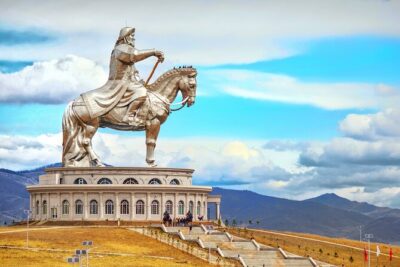
Genghis Khan Statue Day Tour+National Park+Camel Ride+Eagle
Read our review →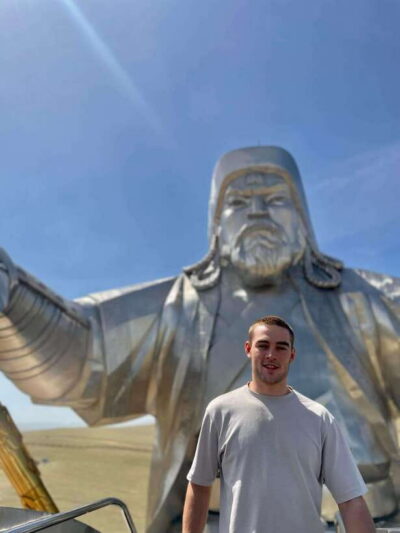
Terelj national park transport /Best price tour
Read our review →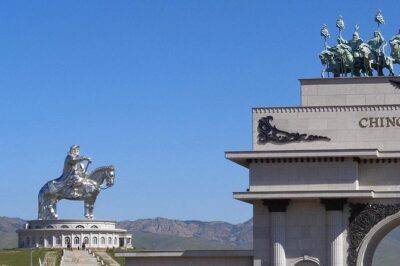
A day trip to Terelj National Park and Statue of Chinggis Khan
Read our review →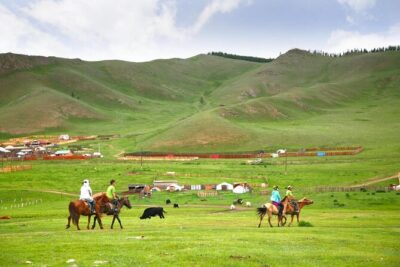
Private Day Tour: Terelj National Park + Genghis Khan’s Statue ..
Read our review →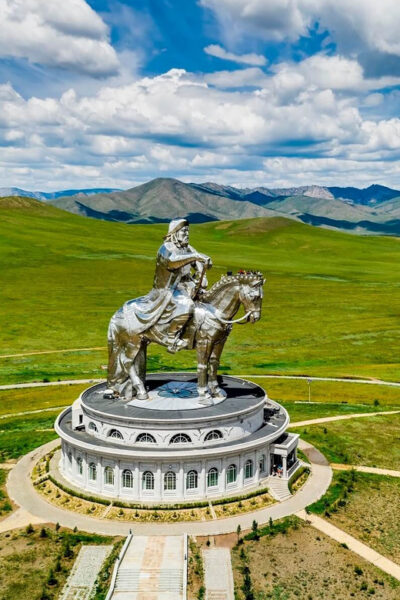
Terelj National Park: Tour with horse riding and hiking
Read our review →
Genghis Khan Day Tour with Terelj National Park
Read our review →
Horse riding experience in Terelj National park 1 day
Read our review →Browse the lists this tour appears in